🏛️ Preah Vihear Temple
Cambodia
About This Sacred Site
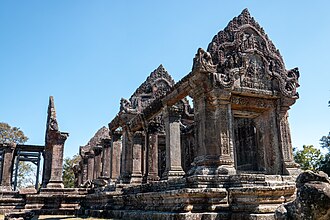
Preah Vihear is a spectacular Hindu temple complex perched atop a 525-meter cliff in the Dangrek Mountains on the Cambodian-Thai border. Dedicated primarily to Lord Shiva, it was built during the reigns of multiple Khmer kings between the 9th and 12th centuries. The temple is exceptional for its architecture, which is adapted to the natural landscape of the cliffside and stretches over 800 meters along a north-south axis. Its remote hilltop location offers breathtaking panoramic views across the Cambodian plains below.
History & Origins
The earliest shrine at Preah Vihear was established in the 9th century under the reign of Yasovarman I (889-910 CE), who dedicated a hermitage to Shiva on the mountaintop known as Shikhareshvara ('Lord of the Peak'). King Suryavarman I (1006-1050 CE) expanded the complex significantly, adding the grand gopura gateways aligned along the cliff's axis. The principal sanctuary was completed under Suryavarman II (1113-1150 CE), the same king who built Angkor Wat. Each of the five successive gopuras marks a stage in the pilgrim's ascent, with elaborate sandstone pediments depicting scenes from the Churning of the Sea of Milk and other Hindu myths. After the decline of the Khmer Empire in the 15th century, the temple was largely abandoned and reclaimed by jungle. France mapped the site during the colonial period, and in 1962 the International Court of Justice ruled the temple belonged to Cambodia, not Thailand. A military standoff between the two countries erupted near the temple in 2008-2011. UNESCO inscribed Preah Vihear as a World Heritage Site in 2008.
Spiritual Significance
Preah Vihear was conceived as an earthly representation of Mount Meru, the cosmic axis in Hindu cosmology where Shiva resides. The temple's linear design, ascending through five gopura gateways over 800 meters, was intended to replicate the pilgrim's spiritual journey from the mundane world to the divine realm. The highest sanctuary, perched at the cliff's edge, housed a gold Shiva lingam that was the focus of Brahmanical rituals performed by royal priests. Inscriptions at the site record that kings made offerings of gold, silver, and cattle to the temple's Brahmin community. The natural setting intensified the spiritual experience: mist rising from the Cambodian plains below was interpreted as the breath of the cosmic ocean. Though the temple was Hindu in origin, later Theravada Buddhist communities also worshipped here, placing Buddha images alongside the Shaivite shrines. Today, Cambodian Buddhists visit to make merit, light incense, and pray at small shrines within the complex. The annual Preah Vihear mountain festival draws thousands of Cambodian pilgrims who climb the ancient stairways to honor both the Hindu and Buddhist heritage of the site.
Key Facts
- •Perched atop a 525-meter cliff with panoramic views across the Cambodian plains
- •Built over 300 years by successive Khmer kings from the 9th to 12th centuries
- •The International Court of Justice awarded sovereignty to Cambodia in 1962
- •Stretches 800 meters along the cliff edge with a series of sanctuaries
- •UNESCO World Heritage Site since 2008
Location
Coordinates: 14.3920, 104.6797
Frequently Asked Questions
What religion is Preah Vihear Temple associated with?▾
Preah Vihear Temple is a Hinduism holy site located in Cambodia. It was established c. 9th century CE and is ranked #188 in our global directory of sacred sites.
When was Preah Vihear Temple established?▾
Preah Vihear Temple dates back to c. 9th century CE. Perched atop a 525-meter cliff with panoramic views across the Cambodian plains
How many people visit Preah Vihear Temple each year?▾
Preah Vihear Temple receives approximately 200,000+ visitors per year. Built over 300 years by successive Khmer kings from the 9th to 12th centuries
What is Preah Vihear Temple known for?▾
A cliffside Hindu temple perched atop a 525-meter escarpment in the Dangrek Mountains. Visitors come seeking pilgrimage, spiritual enlightenment, protection, blessings. The International Court of Justice awarded sovereignty to Cambodia in 1962
Related Holy Sites
Sacred places connected by country, religion, and purpose
🛕Angkor Wat
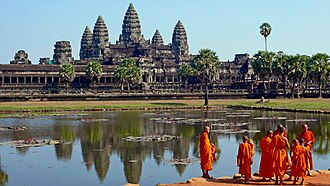
The largest religious monument in the world, originally Hindu then Buddhist.
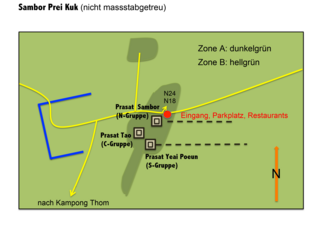
🏛️Sambor Prei Kuk
Pre-Angkorian temple ruins that served as the capital of the Chenla Empire.
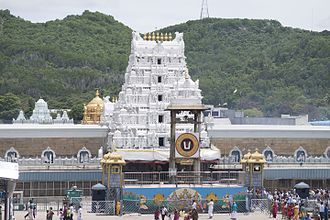
🛕Tirupati (Tirumala Venkateswara Temple)
The richest and most visited Hindu temple in the world.