🌊 Phnom Kulen
Cambodia
About This Sacred Site
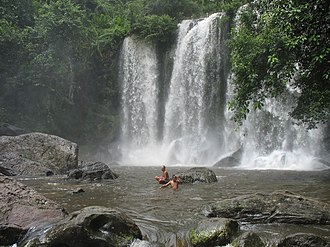
Phnom Kulen is the most sacred mountain in Cambodia, where King Jayavarman II proclaimed independence from Java in 802 CE, founding the Khmer Empire. The mountain's Kbal Spean ('Bridge Head') features an extraordinary riverbed carved with hundreds of Hindu lingas and images of Vishnu, Shiva, and other deities, earning it the name 'River of a Thousand Lingas.' A large reclining Buddha carved from sandstone sits atop the mountain, and sacred waterfalls are used for ritual purification. Cambodians consider a pilgrimage here essential at least once in their lifetime.
History & Origins
Phnom Kulen, known as Cambodia’s most sacred mountain, holds immense religious and historical significance. In 802 CE, King Jayavarman II proclaimed independence from Java here, marking the founding of the Khmer Empire. The site contains ancient sandstone carvings, massive reclining Buddha statues, and the "River of a Thousand Lingas," a riverbed intricately carved with Hindu symbols. Phnom Kulen served as a royal sanctuary and a center of Hindu religious activity. Although partly overgrown, restoration efforts have highlighted its importance in Cambodia’s spiritual and political history, making it a pilgrimage destination and symbol of Khmer identity.
Spiritual Significance
Phnom Kulen holds immense spiritual significance as the birthplace of the Khmer Empire, established by King Jayavarman II in 802 CE, who declared himself devaraja (god-king) here, marking a foundational moment in Hindu kingship doctrine. The site's natural riverbed, Kbal Spean, features over 100 carved Hindu lingas and deity images, representing sacred fertility symbols linked to Shaivism and the worship of Shiva, as described in the ancient Hindu scriptures like the Shiva Purana. Pilgrims engage in ritual bathing in the river to purify themselves, believing the lingas' presence sanctifies the water. Additionally, the large reclining Buddha carved into the rock illustrates the syncretism between Hindu and Buddhist practices prevalent in the region's spiritual history. Annual festivals such as the Kulen Mountain Water Festival celebrate these sacred carvings and the site's role in linking divine authority to earthly power. The mountain's status as a pilgrimage destination is reinforced by traditional Khmer beliefs that the area embodies primordial spiritual power, with devotees often performing circumambulation and offering prayers during key lunar calendar observances.
Key Facts
- •King Jayavarman II founded the Khmer Empire here in 802 CE
- •The Kbal Spean riverbed is carved with hundreds of Hindu lingas and deity images
- •A large reclining Buddha is carved from a boulder at the summit
- •The mountain's waterfalls are considered sacred for ritual purification
- •Considered the birthplace of Cambodian civilization
Location
Coordinates: 13.6100, 104.0800
Frequently Asked Questions
What religion is Phnom Kulen associated with?▾
Phnom Kulen is a Hinduism holy site located in Cambodia. It was established 802 CE and is ranked #592 in our global directory of sacred sites.
When was Phnom Kulen established?▾
Phnom Kulen dates back to 802 CE. King Jayavarman II founded the Khmer Empire here in 802 CE
How many people visit Phnom Kulen each year?▾
Phnom Kulen receives approximately 300,000+ visitors per year. The Kbal Spean riverbed is carved with hundreds of Hindu lingas and deity images
What is Phnom Kulen known for?▾
The sacred mountain where the Khmer Empire was founded, with a riverbed of carved lingas. Visitors come seeking purification, blessings, pilgrimage, healing. A large reclining Buddha is carved from a boulder at the summit
Related Holy Sites
Sacred places connected by country, religion, and purpose
🛕Angkor Wat
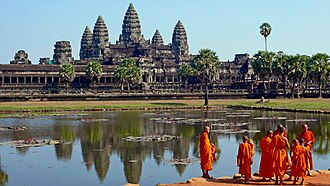
The largest religious monument in the world, originally Hindu then Buddhist.
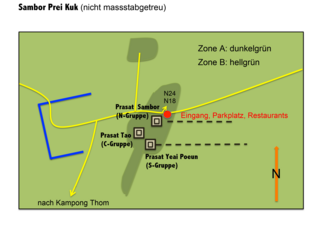
🏛️Sambor Prei Kuk
Pre-Angkorian temple ruins that served as the capital of the Chenla Empire.
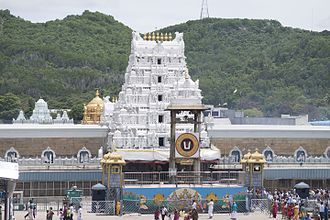
🛕Tirupati (Tirumala Venkateswara Temple)
The richest and most visited Hindu temple in the world.