🕌 Mosque of Muhammad Ali (Alabaster Mosque)
Egypt
About This Sacred Site
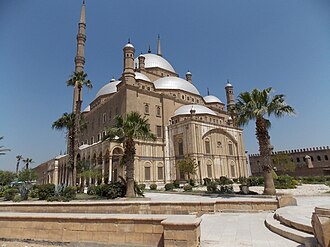
The Mosque of Muhammad Ali, also known as the Alabaster Mosque, sits atop the Citadel of Saladin and dominates the Cairo skyline with its Ottoman-style domes and two slender minarets. Built between 1830 and 1848 by Muhammad Ali Pasha, the founder of modern Egypt, the mosque was modeled after the Sultan Ahmed Mosque (Blue Mosque) in Istanbul. The interior is covered with alabaster panels, and an enormous chandelier illuminates the central prayer hall. The courtyard contains a beautiful ablution fountain and an ornate clock tower gifted by King Louis-Philippe of France in exchange for the Luxor Obelisk that now stands in Paris.
History & Origins
Construction of the mosque commenced in 1830 under Muhammad Ali Pasha, Egypt's Ottoman governor credited with modernizing the country, and was completed in 1848. The mosque was commissioned to commemorate Muhammad Ali's victory over the Mamluks and is situated within the Cairo Citadel, reinforcing its political and defensive significance. Architecturally, it draws inspiration from Istanbul's Sultan Ahmed Mosque, evident in its large central dome flanked by two minarets each measuring approximately 82 meters in height. The mosque underwent major restoration in the 20th century to preserve its alabaster cladding, sourced from Tura quarries near Cairo, which gives the structure its distinctive luminous interior. It has also been the site of several historical events, including public prayers marking national celebrations during the reign of King Farouk and later the Republic of Egypt.
Spiritual Significance
The mosque serves as a prominent place for Sunni Islamic worship, hosting the five daily prayers and special congregational prayers during Ramadan and Eid al-Fitr, with the call to prayer delivered from its tallest minaret. Its interior features inscriptions of verses from the Quran, particularly from Surah Al-Fatiha and Surah Al-Ikhlas, which are recited during daily prayers. The mosque is a pilgrimage destination for Egyptian Muslims who visit to honor Muhammad Ali's legacy and seek blessings in a space symbolizing national unity and religious devotion. During the Mawlid al-Nabi celebrations, special sermons and Quranic recitations are held, attracting worshippers from across Cairo. The mosque's location within the Citadel also links it to the historic role of Islam in governance and military leadership in Egypt.
Key Facts
- •Built between 1830 and 1848 by Muhammad Ali Pasha, founder of modern Egypt
- •The interior is clad in alabaster panels, giving it its popular name
- •Modeled after the Sultan Ahmed Mosque (Blue Mosque) in Istanbul
- •The clock tower in the courtyard was a gift from France in exchange for the Luxor Obelisk
- •Visible from almost anywhere in Cairo due to its elevated position on the Citadel
Location
Coordinates: 30.0288, 31.2599
Frequently Asked Questions
What religion is Mosque of Muhammad Ali (Alabaster Mosque) associated with?▾
Mosque of Muhammad Ali (Alabaster Mosque) is a Islam holy site located in Egypt. It was established 1848 and is ranked #710 in our global directory of sacred sites.
When was Mosque of Muhammad Ali (Alabaster Mosque) established?▾
Mosque of Muhammad Ali (Alabaster Mosque) dates back to 1848. Built between 1830 and 1848 by Muhammad Ali Pasha, founder of modern Egypt
How many people visit Mosque of Muhammad Ali (Alabaster Mosque) each year?▾
Mosque of Muhammad Ali (Alabaster Mosque) receives approximately 1+ million visitors per year. The interior is clad in alabaster panels, giving it its popular name
What is Mosque of Muhammad Ali (Alabaster Mosque) known for?▾
Cairo's most visible mosque, dominating the Citadel with its Ottoman-style domes and minarets. Visitors come seeking pilgrimage, peace, blessings, guidance. Modeled after the Sultan Ahmed Mosque (Blue Mosque) in Istanbul
Related Holy Sites
Sacred places connected by country, religion, and purpose