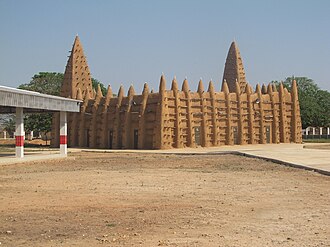
🕌 Kong Mosque
Ivory Coast
About This Sacred Site
The Kong Mosque is the principal mosque in the historic city of Kong, northern Ivory Coast, dating back to the 1700s. Constructed with traditional Sudano-Sahelian architectural styles, it features mud-brick walls and wooden torons. Kong was a key center for the Dyula trading network, and the mosque served as both a religious and educational institution. The mosque remains central to the city’s Islamic identity, reflecting centuries of Muslim scholarship and commerce in the region.
History & Origins
Founded in the 1700s during the peak of the Dyula trading community's influence, the mosque was constructed as part of Kong's rise as a commercial and Islamic learning center in West Africa. The original structure featured Sudano-Sahelian architectural elements, including timber beams protruding from mud walls, characteristic of the region's mosque construction. Over the centuries, the mosque underwent renovations in the 19th century under King Seku Amadu, who expanded its facilities to accommodate the growing Muslim population. Kong's status as an intellectual hub attracted scholars who established Quranic schools linked to the mosque, reinforcing its role in Islamic education. Despite challenges during French colonial rule in the early 20th century, the mosque retained its religious functions and was restored in the 1980s to preserve its heritage. Today, it remains a testament to the Islamic scholarship and trade networks that shaped the area.
Spiritual Significance
As a historic center of Islamic learning, the mosque facilitates daily prayers adhering to the Maliki madhhab, with Friday Jumu'ah prayers drawing congregants from across the region. It hosts annual Mawlid celebrations featuring recitations of the Seerah and Quranic verses emphasizing the Prophet Muhammad's life. The mosque's attached madrasa offers instruction in Tajweed and Fiqh, preserving traditional Islamic jurisprudence teachings. Pilgrims often engage in Dhikr sessions within its courtyard, following Sufi devotional practices prevalent in West African Islam. The mosque's architectural design, with its distinctive mud-brick minarets, symbolizes the endurance of Islamic faith in a trading city historically influenced by trans-Saharan connections. Its role in fostering Islamic identity is noted in local oral histories and the works of scholars such as Al-Hajj Umar Tall, who referenced Kong as a spiritual landmark.
Key Facts
- •Kong was one of the most important centers of Islamic learning in West Africa
- •The Dyula trading community established Kong as a major commercial center
- •Built in the distinctive Sudano-Sahelian mud-brick architectural style
- •Kong's scholars played a key role in spreading Islam in the forest regions of West Africa
- •Much of the historical city was destroyed by Samori Ture in 1897 but the mosque was rebuilt
Location
Coordinates: 9.1500, -4.6167
Frequently Asked Questions
What religion is Kong Mosque associated with?▾
Kong Mosque is a Islam holy site located in Ivory Coast. It was established c. 1700s and is ranked #964 in our global directory of sacred sites.
When was Kong Mosque established?▾
Kong Mosque dates back to c. 1700s. Kong was one of the most important centers of Islamic learning in West Africa
How many people visit Kong Mosque each year?▾
Kong Mosque receives approximately 20,000+ visitors per year. The Dyula trading community established Kong as a major commercial center
What is Kong Mosque known for?▾
A historic Sudano-Sahelian mosque in the ancient trading city of Kong, a center of Islamic learning. Visitors come seeking pilgrimage, spiritual enlightenment, blessings, guidance. Built in the distinctive Sudano-Sahelian mud-brick architectural style
Related Holy Sites
Sacred places connected by country, religion, and purpose
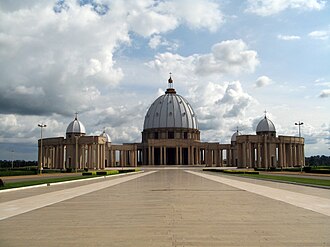
⛪Basilica of Our Lady of Peace (Yamoussoukro)
The largest church in the world, modeled on St. Peter's Basilica, in Ivory Coast's capital.
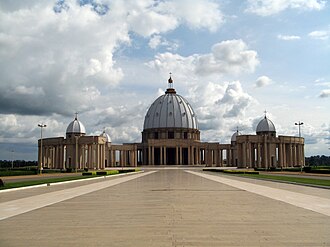
⛪Basilica of Our Lady of Peace Yamoussoukro
The world's largest church by area, inspired by St. Peter's Basilica.