🌿 Beng Mealea
Cambodia
About This Sacred Site
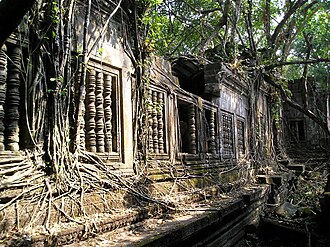
Beng Mealea is a sprawling, largely unrestored temple about 40 kilometers east of the main Angkor group. Built in the 12th century during the reign of King Suryavarman II (the same king who built Angkor Wat), scholars believe it may have served as a prototype for Angkor Wat due to similarities in layout and design. The temple is almost entirely consumed by jungle, with massive trees growing through collapsed galleries and towers. Its remote location and ruined state give visitors an experience close to what early explorers encountered when they first rediscovered Angkor.
Spiritual Significance
Constructed in the early 12th century under King Suryavarman II, Beng Mealea represents a Shaivite Hindu temple complex whose architecture closely parallels Angkor Wat, suggesting it may have been a prototype or complementary sanctuary. Pilgrims engage in rituals honoring Shiva, including the offering of bilva leaves and recitations from the Shiva Purana. The temple’s extensive galleries, nearly engulfed by dense jungle and strangler figs, create a labyrinthine environment symbolizing the cosmic mountain Meru, central to Hindu cosmology. Annual ceremonies on Maha Shivaratri draw devotees who perform night-long vigils and chant mantras aimed at spiritual purification and protection. The temple's sculptures depict scenes from the Ramayana and Mahabharata, facilitating devotional storytelling and teaching among pilgrims. Local priests maintain sacred fire altars where agnihotra rituals are periodically conducted, fortifying the site's consecration despite centuries of natural reclamation.
Key Facts
- •May have served as a prototype for Angkor Wat based on architectural similarities
- •Built during the reign of Suryavarman II in the 12th century
- •Almost entirely engulfed by jungle and largely unrestored
- •The temple's layout closely mirrors that of Angkor Wat
- •Connected to Angkor by an ancient raised road
Location
Coordinates: 13.5886, 104.1014
Frequently Asked Questions
What religion is Beng Mealea associated with?▾
Beng Mealea is a Hinduism holy site located in Cambodia. It was established c. 12th century CE and is ranked #444 in our global directory of sacred sites.
When was Beng Mealea established?▾
Beng Mealea dates back to c. 12th century CE. May have served as a prototype for Angkor Wat based on architectural similarities
How many people visit Beng Mealea each year?▾
Beng Mealea receives approximately 200,000+ visitors per year. Built during the reign of Suryavarman II in the 12th century
What is Beng Mealea known for?▾
A vast, unrestored jungle temple that may have been the prototype for Angkor Wat. Visitors come seeking meditation, peace, ancestral connection, spiritual enlightenment. Almost entirely engulfed by jungle and largely unrestored
Related Holy Sites
Sacred places connected by country, religion, and purpose
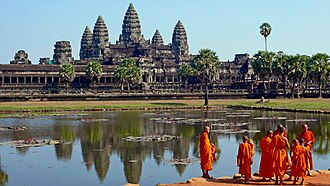
🛕Angkor Wat
The largest religious monument in the world, originally Hindu then Buddhist.
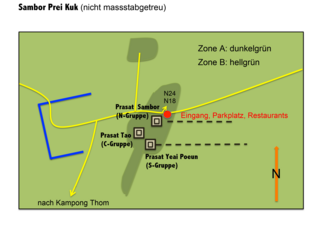
🏛️Sambor Prei Kuk
Pre-Angkorian temple ruins that served as the capital of the Chenla Empire.
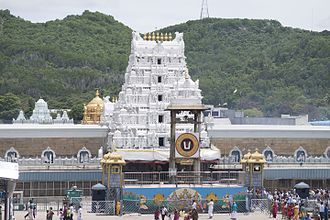
🛕Tirupati (Tirumala Venkateswara Temple)
The richest and most visited Hindu temple in the world.