
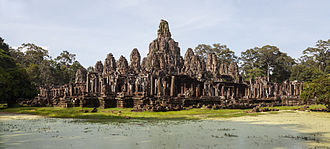
🗿 Bayon Temple
Cambodia
About This Sacred Site
Bayon is a richly decorated Khmer temple at the exact center of the ancient city of Angkor Thom. Built in the late 12th or early 13th century as the state temple of King Jayavarman VII, it is most famous for its multitude of serene, massive stone faces on its many towers, which scholars believe represent the Bodhisattva Avalokiteshvara or possibly Jayavarman VII himself. The temple features 216 giant stone faces and 1.2 kilometers of extraordinary bas-relief murals depicting both mythological scenes and everyday life in the Khmer Empire.
History & Origins
Constructed circa 1190 CE by King Jayavarman VII in Angkor Thom, the Bayon Temple exemplifies Mahayana Buddhist architecture with its 54 towers adorned with 216 massive stone faces, each approximately 4 meters tall, gazing serenely in cardinal directions. The temple replaced earlier Hindu shrines, symbolizing the state’s shift towards Buddhism during Jayavarman VII’s reign. Extensive bas-reliefs spanning 1.2 kilometers depict historical events, daily life, and mythological narratives, providing insight into 12th-century Khmer society. The temple complex underwent partial restoration in the 20th century led by the École française d'Extrême-Orient, addressing damage from natural erosion and conflict-related destruction. The Bayon’s central sanctuary housed a large statue of the Buddha, emphasizing the king’s role as a devaraja, or god-king, integrating political authority with Buddhist cosmology. The site’s layered construction reflects syncretism between Mahayana Buddhist and indigenous Khmer beliefs.
Spiritual Significance
Bayon Temple’s 216 stone faces are believed to represent Avalokiteshvara, embodying compassion, linking the monument to Mahayana Buddhist ideals of universal salvation promoted by King Jayavarman VII. Pilgrims historically engaged in circumambulation around the temple’s terraces while reciting sutras such as the Prajnaparamita to invoke wisdom and compassion. The extensive bas-reliefs illustrate Buddhist Jataka tales and cosmological themes, serving as didactic tools for monastic instruction and lay devotion. Ritual offerings and incense burning took place in the central sanctuary beneath the smiling faces, symbolizing the king’s spiritual guardianship over his realm. The temple’s alignment with cardinal points and mandala-like layout reflects tantric Buddhist influences, integrating sacred geometry into worship practices. Contemporary festivals include commemorations of Jayavarman VII's reign and Buddhist holy days, during which monks chant and perform ritual dances inspired by historical Khmer traditions.
Key Facts
- •Features 216 massive stone faces on 54 towers gazing serenely in all directions
- •Built by King Jayavarman VII as a Mahayana Buddhist temple
- •Contains 1.2 kilometers of bas-relief murals depicting Khmer daily life and mythology
- •Located at the exact center of the ancient walled city of Angkor Thom
- •Originally a Buddhist temple, it was later modified to include Hindu elements
Location
Coordinates: 13.4411, 103.8590
Frequently Asked Questions
What religion is Bayon Temple associated with?▾
Bayon Temple is a Buddhism holy site located in Cambodia. It was established c. 1190 CE and is ranked #555 in our global directory of sacred sites.
When was Bayon Temple established?▾
Bayon Temple dates back to c. 1190 CE. Features 216 massive stone faces on 54 towers gazing serenely in all directions
How many people visit Bayon Temple each year?▾
Bayon Temple receives approximately 1+ million visitors per year. Built by King Jayavarman VII as a Mahayana Buddhist temple
What is Bayon Temple known for?▾
A Khmer temple famous for its 216 massive serene stone faces gazing in all directions. Visitors come seeking spiritual enlightenment, peace, meditation, guidance. Contains 1.2 kilometers of bas-relief murals depicting Khmer daily life and mythology
Related Holy Sites
Sacred places connected by country, religion, and purpose
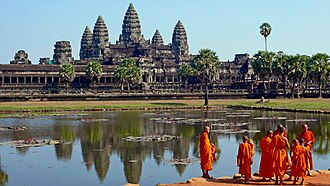
🛕Angkor Wat
The largest religious monument in the world, originally Hindu then Buddhist.
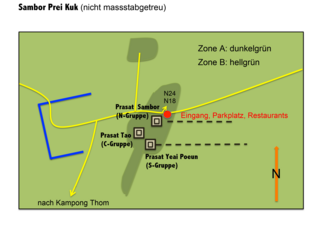
🏛️Sambor Prei Kuk
Pre-Angkorian temple ruins that served as the capital of the Chenla Empire.
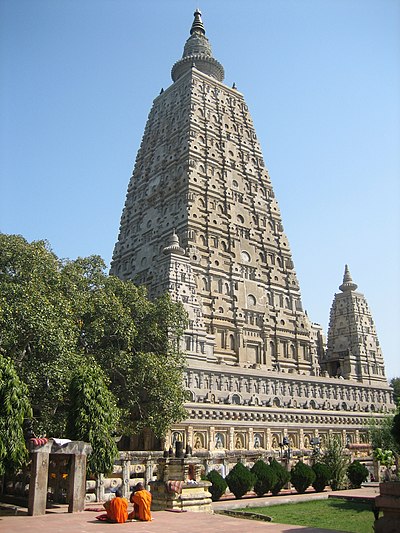
☸️Bodh Gaya (Mahabodhi Temple)
Where Siddhartha Gautama attained enlightenment and became the Buddha.
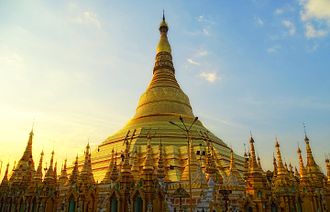
🪷Shwedagon Pagoda
Myanmar's most sacred Buddhist pagoda, gilded with 60 tons of gold.
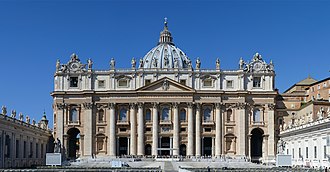
⛪Vatican City (St. Peter's Basilica)
The spiritual center of Roman Catholicism and home of the Pope.

🕌Temple Mount / Al-Aqsa (Jerusalem)
Sacred to Judaism, Christianity, and Islam — the most contested holy site on Earth.

