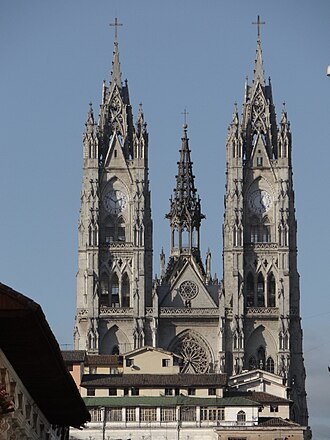
⛪ Basílica del Voto Nacional (Quito)
Ecuador
About This Sacred Site
The Basílica del Voto Nacional in Quito is the largest neo-Gothic basilica in the Americas. Construction began in 1892 and, according to local legend, the basilica will never be truly finished because completion would herald the end of the world. The building is notable for replacing traditional European gargoyles with Ecuadorian animals — iguanas, tortoises, armadillos, and condors — giving it a uniquely South American character. Visitors can climb the towers via steep ladders for panoramic views of Quito.
History & Origins
Construction of the Basílica del Voto Nacional began in 1892 under the direction of French architect Emilio Tarlier, inspired by the great Gothic cathedrals of Europe. Measuring 115 meters in length and 30 meters in width, it stands as the largest neo-Gothic basilica in the Americas. Despite its consecration occurring in 1988, the basilica remains technically unfinished, particularly the towers which have been left incomplete as per local legend to prevent the 'end of the world.' The exterior features traditional gargoyles sculpted as native Ecuadorian animals such as iguanas and armadillos, symbolizing a unique fusion of European Gothic and local fauna. The basilica was commissioned as a national vow to the Sacred Heart of Jesus following Ecuador's 19th-century political upheavals. Restoration efforts in the late 20th century focused on preserving stained glass windows depicting scenes from Ecuadorian religious history.
Spiritual Significance
The basilica is a major pilgrimage site for devotees honoring the Sacred Heart of Jesus, with special masses held on the feast day of the Sacred Heart, which falls 19 days after Pentecost. Rituals include the recitation of the Litany of the Sacred Heart and Eucharistic adoration, aligning with Catholic doctrine from the encyclical "Annum Sacrum" by Pope Leo XIII. Pilgrims often climb the unfinished towers as a devotional act symbolizing spiritual ascent, while the gargoyles serve as reminders of the triumph of faith over evil, linking to medieval Christian symbolism. The basilica hosts annual processions during Corpus Christi and celebrates the Solemnity of Christ the King with elaborate choir performances of Gregorian chant. Confessionals within the basilica are frequented due to the site's reputation for spiritual renewal.
Key Facts
- •The largest neo-Gothic basilica in the Americas at 115 meters long and 30 meters wide
- •Construction began in 1892 and is technically still 'unfinished'
- •Traditional gargoyles are replaced by Ecuadorian animals: iguanas, condors, tortoises, and armadillos
- •Local legend says that when construction is complete, the world will end
- •Located in Quito's UNESCO World Heritage historic center
Location
Coordinates: -0.2150, -78.5070
Frequently Asked Questions
What religion is Basílica del Voto Nacional (Quito) associated with?▾
Basílica del Voto Nacional (Quito) is a Christianity holy site located in Ecuador. It was established 1892 (consecrated 1988) and is ranked #285 in our global directory of sacred sites.
When was Basílica del Voto Nacional (Quito) established?▾
Basílica del Voto Nacional (Quito) dates back to 1892 (consecrated 1988). The largest neo-Gothic basilica in the Americas at 115 meters long and 30 meters wide
How many people visit Basílica del Voto Nacional (Quito) each year?▾
Basílica del Voto Nacional (Quito) receives approximately 500,000 visitors per year. Construction began in 1892 and is technically still 'unfinished'
What is Basílica del Voto Nacional (Quito) known for?▾
The largest neo-Gothic basilica in the Americas, with Ecuadorian animals as gargoyles instead of European ones. Visitors come seeking pilgrimage, blessings, protection, guidance. Traditional gargoyles are replaced by Ecuadorian animals: iguanas, condors, tortoises, and armadillos
Related Holy Sites
Sacred places connected by country, religion, and purpose
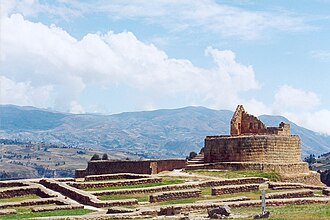
🏛️Ingapirca
Ecuador's most important Inca ruins, a sacred sun temple built atop earlier Cañari foundations.
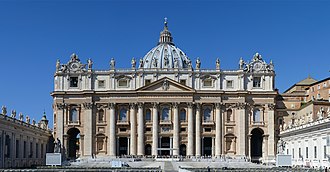
⛪Vatican City (St. Peter's Basilica)
The spiritual center of Roman Catholicism and home of the Pope.
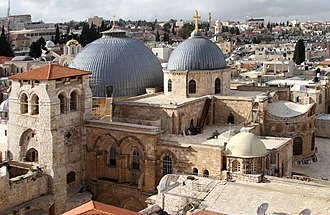
✝️Church of the Holy Sepulchre
The site where Jesus was crucified, buried, and resurrected.