🌺 Bahá'í Gardens (Haifa)
Israel
About This Sacred Site
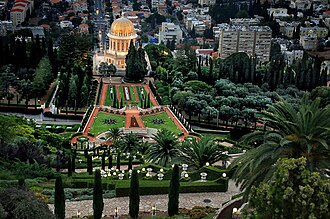
The Bahá'í Gardens in Haifa are one of the most beautiful sacred sites in the world — nineteen meticulously manicured terraces cascading down the northern slope of Mount Carmel, with the golden-domed Shrine of the Báb at their heart. The Báb (meaning 'Gate') was the forerunner of Bahá'u'lláh, the founder of the Bahá'í Faith, and his remains are interred in the shrine. The gardens extend nearly a kilometer up the mountainside and represent a 'stairway to heaven,' symbolizing the spiritual ascent of the soul. Every plant, stone, and water feature is maintained to perfection by Bahá'í volunteers from around the world. The gardens are a place of pilgrimage for the world's 5+ million Bahá'ís and a UNESCO World Heritage Site.
History & Origins
The Bahá'í Gardens, completed in 2001, encompass nineteen terraces ascending Mount Carmel in Haifa, symbolically representing the 19 original followers of the Báb, the forerunner to Bahá'u'lláh, founder of the Bahá'í Faith. The Shrine of the Báb, with its distinctive golden dome, was first constructed in 1909 to inter the Báb's remains, thanks to the efforts of Shoghi Effendi, the Guardian of the Bahá'í Faith, who oversaw later expansions and landscaping. The gardens have undergone significant renovations since the original shrine's establishment, including the terraced design implemented during the mid-20th century, under the guidance of architect Fariborz Sahba. The site was recognized as a UNESCO World Heritage Site in 2008, highlighting its cultural and religious importance. The peaceful terraces and meticulously manicured gardens serve as a living memorial to Bahá'í history and its teachings of unity and harmony.
Spiritual Significance
The nineteen terraces represent the eighteen disciples of the Báb plus the Báb himself, embodying the foundational spiritual community of the Bahá'í Faith. Pilgrims visiting the site engage in prayer and meditation around the Shrine of the Báb, which houses the remains of the Báb interred in 1909, a sacred act symbolizing the connection between the physical and spiritual worlds. The gardens facilitate the pilgrimage prescribed in Bahá'í scriptures, especially the Tablets of Bahá'u'lláh, which emphasize the importance of Mount Carmel as a spiritual center. The site is also the locus for the annual Ridván Festival, commemorating Bahá'u'lláh’s declaration of his mission, during which devotees gather for prayer and reflection. The terraces' geometric precision and horticultural beauty reflect Bahá'í principles of order and unity, and the gardens serve as a place for quiet contemplation and study of Bahá'í writings.
Key Facts
- •Nineteen terraces represent the 19 original followers of the Báb
- •The golden-domed Shrine of the Báb contains his remains, interred in 1909
- •UNESCO World Heritage Site since 2008
- •Maintained by Bahá'í volunteers from around the world — no paid gardeners
- •The gardens took over 100 years to complete, from 1891 to 2001
Location
Coordinates: 32.8128, 34.9878
Frequently Asked Questions
What religion is Bahá'í Gardens (Haifa) associated with?▾
Bahá'í Gardens (Haifa) is a Bahá'í holy site located in Israel. It was established 1909 (shrine), 2001 (gardens completed) and is ranked #389 in our global directory of sacred sites.
When was Bahá'í Gardens (Haifa) established?▾
Bahá'í Gardens (Haifa) dates back to 1909 (shrine), 2001 (gardens completed). Nineteen terraces represent the 19 original followers of the Báb
How many people visit Bahá'í Gardens (Haifa) each year?▾
Bahá'í Gardens (Haifa) receives approximately 1+ million visitors per year. The golden-domed Shrine of the Báb contains his remains, interred in 1909
What is Bahá'í Gardens (Haifa) known for?▾
Nineteen stunning terraced gardens cascading down Mount Carmel, shrine of the Báb. Visitors come seeking peace, spiritual enlightenment, meditation, guidance. UNESCO World Heritage Site since 2008
Related Holy Sites
Sacred places connected by country, religion, and purpose