
What Makes a Place Holy? The Science and Spirit of Sacred Sites
Why do certain locations feel sacred across cultures and centuries? Exploring the geology, psychology, and spirituality of holy ground.
The Mystery of Sacred Ground
Why do certain places feel sacred? Why have humans, across every culture and era, designated specific locations as holy? The answer involves an intriguing intersection of geology, psychology, history, and something harder to define.
Geological Factors
Many sacred sites sit on geologically unusual features:
Water: Springs, wells, and rivers feature prominently — Lourdes, the Ganges, the Well of Zamzam in Mecca. Water sources in arid landscapes were literally life-giving, easily associated with divine grace.
Mountains: From Mount Sinai to Mount Kailash to Mount Fuji, peaks have been sacred across cultures. The physical act of ascending — leaving the everyday world below — mirrors spiritual ascent.
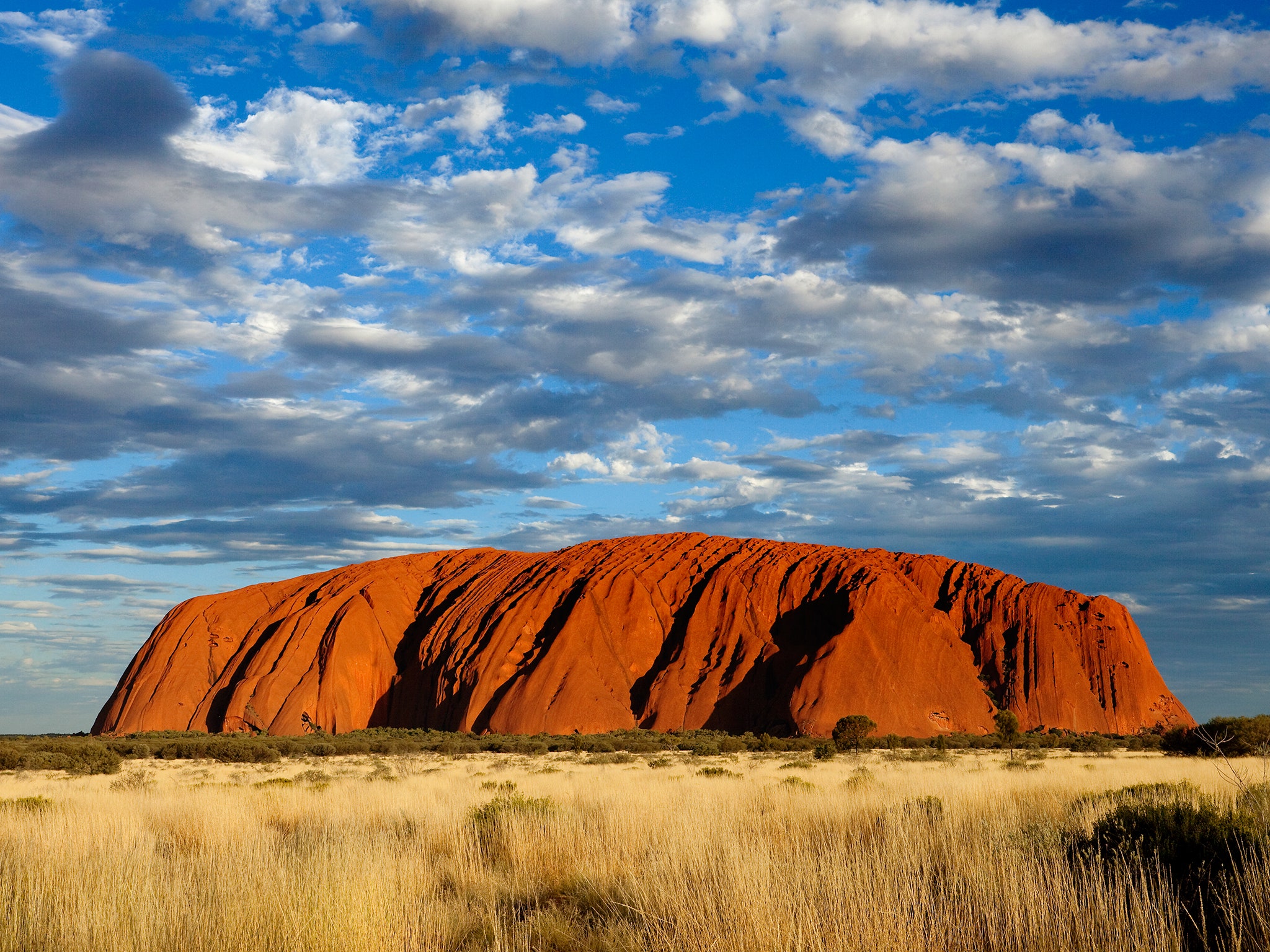
Unusual formations: Uluru, Stonehenge, and the Sedona vortexes sit on geologically distinctive terrain. Some researchers have noted correlations between sacred sites and areas of unusual electromagnetic or geothermal activity.
The Role of History
Places become holy through accumulated experience. The Church of the Holy Sepulchre is sacred because of what is believed to have happened there. Each prayer offered, each miracle reported, each pilgrim's tears add another layer to a site's spiritual significance.
Psychology and Architecture
Research shows that certain spatial qualities reliably evoke awe: vast open spaces, extreme height, unusual acoustic properties, dramatic light effects. Sacred architects have understood this intuitively for millennia — the soaring nave of a Gothic cathedral, the echoing dome of a mosque, the hushed dimness of a cave temple all manipulate these psychological triggers.
Beyond Explanation
Yet something remains that science cannot fully account for. Why do confirmed atheists report feeling "something" at certain holy sites? Why do infants calm in sacred spaces? Perhaps the most honest answer is that some places simply are holy — and our job is not to explain but to experience.
The Universal Impulse to Sanctify
Archaeologists have found evidence of sacred sites dating back over 70,000 years — marked caves in South Africa, ritual burial sites in the Levant, carefully arranged stone circles across prehistoric Europe. The impulse to designate certain places as holy appears to be one of the most fundamental characteristics of our species. But what transforms an ordinary landscape into a sacred one? The answers span theology, psychology, neuroscience, history, and geology, and understanding them deepens the experience of visiting any holy site.
Theophany: Where God Appeared
The most straightforward explanation for a place's sanctity is theophany — a direct divine manifestation. In the Abrahamic traditions, God's appearance to Moses at the burning bush sanctified that spot on Mount Sinai. The angel Gabriel's revelation to Muhammad in the cave of Hira near Mecca established it as one of Islam's holiest places. In Hinduism, locations where deities manifested or performed cosmic acts become tirthas (crossing places between the mortal and divine realms). In each case, the divine encounter permanently altered the spiritual valence of the location in the eyes of the faithful.
Martyrdom and Sacred Death
Many of the world's most visited holy sites are places of sacred death. Golgotha in Jerusalem, where Christ was crucified, became the most important site in Christianity. Karbala in Iraq, where the Prophet Muhammad's grandson Hussein was martyred in 680 CE, became central to Shia Islam. Sikh gurdwaras often mark sites where Gurus or their followers sacrificed their lives for their faith. The logic is consistent across traditions: the blood of the holy sanctifies the ground on which it was shed, creating a permanent connection between that physical location and the spiritual realm.
Natural Features with Numinous Qualities
Some places seem inherently sacred — mountains whose peaks penetrate cloud layers, springs that emerge from deep in the earth, groves of trees so ancient they seem to belong to a different world, caves that open into darkness and silence. These natural features possess what the theologian Rudolf Otto called the "numinous" — a quality of awe, mystery, and transcendence that humans across cultures interpret as the presence of something greater than themselves. Mount Kailash, Uluru, the Amazon headwaters, and Mount Fuji all exemplify this phenomenon. Notably, modern neuroscience research has shown that exposure to vast natural landscapes triggers measurable changes in brain activity associated with self-transcendence and spiritual experience.
Accumulated Devotion: The Weight of Prayer
Some scholars argue that holy sites become holy through use — that centuries or millennia of focused prayer, worship, and spiritual practice create a kind of spiritual atmosphere that becomes self-reinforcing. This theory explains why ancient pilgrimage sites feel different from newly built churches, even if both are architecturally impressive. The physicist David Bohm's concept of "implicate order" has been invoked to suggest that intense, focused consciousness can leave lasting impressions on a physical location, though this remains speculative and outside mainstream science. What is not speculative is the subjective experience: visitors to ancient holy sites consistently report sensing something they describe as "presence," "weight," or "depth" that they do not experience in newer religious buildings.
Political Power and Sacred Authority
We cannot ignore the role of political power in designating sacred spaces. Emperor Constantine's identification of holy sites in Jerusalem in the 4th century — the Church of the Holy Sepulchre, the Church of the Nativity — was as much a political act as a spiritual one, establishing Christian claims to the Holy Land. The construction of the Dome of the Rock on the Temple Mount served similar political-spiritual purposes for the Umayyad caliphate. Hindu nationalist movements have reasserted claims to sites converted to mosques during the Mughal period. The intersection of the sacred and the political is uncomfortable but inescapable.
Can New Places Become Holy?
If holiness requires millennia of accumulated devotion, can new places become sacred? The evidence suggests yes. Lourdes was an obscure French town until Bernadette's visions in 1858; today it receives six million pilgrims annually and the Catholic Church has verified 70 miraculous healings there. Medjugorje in Bosnia, where Marian apparitions were first reported in 1981, now draws over a million visitors a year, despite the Church's cautious stance. The Bahá'í Gardens in Haifa, completed in 2001, already convey a palpable sense of sacred space to visitors of all faiths. Holiness, it appears, is not solely a function of time — though time certainly helps.

