
The World's Oldest Temples: Sacred Sites That Predate Stonehenge
From Göbekli Tepe to Malta's Megalithic Temples, discover ancient sacred structures that rewrote our understanding of civilization.
When Did Humans Start Building Temples?
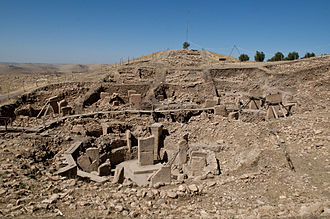
The discovery of Göbekli Tepe in southeastern Turkey fundamentally changed our understanding of human history. Dating to approximately 9500 BCE — roughly 6,000 years before Stonehenge — this site proved that organized religion predated agriculture, not the other way around.
Göbekli Tepe: 12,000 Years Old
Built by hunter-gatherers who hadn't yet learned to farm, Göbekli Tepe features massive T-shaped pillars weighing up to 10 tons, decorated with sophisticated animal carvings. The site was intentionally buried around 8000 BCE for reasons we still don't understand.
Only about 5% has been excavated so far. What lies beneath could further revolutionize our understanding of early civilization.
Malta's Megalithic Temples: 5,500 Years Old
The Ħaġar Qim and Mnajdra temple complexes on Malta predate the Egyptian pyramids by a millennium. These stone temples feature remarkable astronomical alignments — during the equinoxes, sunlight passes through a specific doorway to illuminate an inner altar.
Newgrange, Ireland: 5,200 Years Old
This massive passage tomb in Ireland's Boyne Valley was built around 3200 BCE. Its most remarkable feature: during the winter solstice, a beam of sunlight penetrates a roof box and illuminates the inner chamber for exactly 17 minutes. This precision alignment was no accident.
What These Sites Tell Us
The common thread across these ancient temples is astronomical awareness. Our earliest ancestors were deeply attuned to celestial cycles and built their most sacred structures to honor them. The impulse to create sacred space is, it seems, one of humanity's oldest instincts.
Karahan Tepe: Göbekli Tepe's Sister Site
Discovered just 35 kilometers from Göbekli Tepe, Karahan Tepe may be even older according to some estimates. Excavations that intensified in 2019 revealed carved pillars similar to those at Göbekli Tepe but with distinct stylistic differences, including striking carved human heads with elongated features. The site contains what appears to be a sophisticated water management system, suggesting these ancient builders possessed engineering knowledge far beyond what was previously attributed to pre-agricultural societies. The discovery of Karahan Tepe suggests that Göbekli Tepe was not an isolated phenomenon but part of a wider network of monumental sacred sites built across southeastern Turkey during the Pre-Pottery Neolithic period.
The Temples of Tarxien, Malta
While Ħaġar Qim and Mnajdra often receive the most attention, the Tarxien temple complex in Malta contains some of the most remarkable prehistoric art in the world. Built between 3600 and 2500 BCE, Tarxien features intricate spiral carvings, a colossal stone statue of what appears to be a deity or mother goddess figure, and evidence of animal sacrifice in its rituals. The temples were built without metal tools — everything was carved using flint and obsidian. The sheer labor required to quarry, transport, and erect these massive limestone blocks without wheels, pulleys, or draft animals speaks to the profound religious motivation that drove these builders.
Knap of Howar, Scotland: The Oldest Standing House in Northern Europe
Dating to approximately 3700 BCE, the Knap of Howar on the Orkney island of Papa Westray is the oldest preserved stone house in northern Europe. While primarily a dwelling, archaeological evidence suggests it also served ritual purposes, with certain spaces appearing to be dedicated to ceremonial activities. The structure's remarkable preservation — its walls still stand to roof height after nearly 6,000 years — gives us an unusually intimate look at the intersection of domestic and sacred life in Neolithic northern Europe.
Sechin Bajo, Peru: The Americas' Oldest Temple
In the Casma Valley of coastal Peru, Sechin Bajo dates to approximately 3500 BCE, making it one of the oldest known monumental structures in the Americas. The site features a circular plaza surrounded by stone walls, a form that would become characteristic of Andean sacred architecture for the next four millennia. The discovery of Sechin Bajo pushed back the date of monumental construction in the Americas by several centuries and demonstrated that complex religious architecture emerged in South America independently of Old World influences.
The Engineering Mystery
Perhaps the most remarkable aspect of these ancient temples is not their age but their sophistication. Göbekli Tepe's builders transported and erected pillars weighing up to 10 tons without wheels, metal tools, or draft animals. Malta's temple builders created structures that rival later Bronze Age engineering despite being a small island community. Newgrange's builders achieved a solar alignment so precise that it still functions perfectly after 5,200 years, despite the accumulated effects of earthquakes and land subsidence. These achievements challenge the assumption that technological progress is linear and suggest that prehistoric peoples possessed knowledge and capabilities that we are only beginning to understand.
Why These Sites Matter Today
Understanding that organized religion and monumental architecture predate agriculture overturns one of the foundational narratives of human civilization. The traditional story — that farming led to settled communities, which led to social complexity, which led to religion — now appears to have the causation reversed. The desire to build sacred spaces and gather for worship may have been the driving force that motivated humans to settle, cooperate in large numbers, and eventually develop agriculture to support permanent communities. In other words, it was not bread that came first, but faith.

