
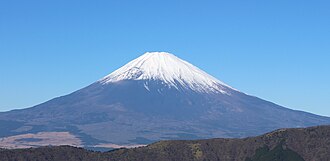
Fire and Faith: Sacred Volcanoes and Hot Springs Around the World
From Mount Fuji to Iceland's geothermal springs, discover why volcanic landscapes have inspired worship across cultures.
Where Earth Meets the Divine
Volcanoes, hot springs, and geothermal features have inspired religious awe since prehistory. These places where the Earth's interior breaks through to the surface seem to offer a direct connection to primordial creative forces.
Mount Fuji, Japan
Japan's highest peak and most sacred mountain is a volcano that last erupted in 1707. In Shinto, Fuji-san is itself a deity. The tradition of climbing for spiritual purification dates back to the 7th century. Over 200,000 people summit annually during the July-September season.
Mount Agung, Bali
The holiest mountain in Bali and home to the mother temple, Pura Besakih. Balinese Hindus believe it is a fragment of Mount Meru, the cosmic axis. When Agung erupted in 2017, it was widely interpreted as a spiritual sign.
Zoroastrian Fire Temples
Zoroastrianism, one of the world's oldest religions, centers its worship on sacred fire. The Atashkadeh fire temple in Yazd, Iran, contains a flame that has reportedly burned continuously since 470 CE — over 1,500 years.
Iceland's Geothermal Sacred Sites
Iceland's early settlers considered hot springs sacred — places where the hidden world intersected with the visible. Snorralaug, a hot spring associated with the great medieval writer Snorri Sturluson, was considered a place of poetic inspiration.
The Universal Appeal
The pattern is global: people worldwide have recognized volcanic and geothermal features as places where the Earth is alive, breathing, creating. In these landscapes, the boundary between the physical and spiritual worlds feels thinnest.
The Most Generous Table on Earth
Every day, in the kitchen of the Harmandir Sahib (Golden Temple) in Amritsar, India, approximately 100,000 people sit on the floor in long rows and eat a free meal together. On weekends and holidays, that number can exceed 150,000. There is no means test, no religious requirement, no identification check, and no limit to how many times you may return. The langar (communal kitchen) of the Golden Temple is the largest free kitchen in the world, and it has operated continuously for over 450 years. It is, by any measure, one of the most extraordinary expressions of religious faith in action anywhere on Earth.
The Theology of Langar
Langar is not charity — it is theology made edible. The institution was established by Guru Nanak, the founder of Sikhism, in the 15th century as a radical rejection of the Hindu caste system's prohibition against people of different castes eating together. By requiring everyone — king and beggar, Brahmin and Dalit, Hindu, Muslim, Sikh, and Christian — to sit on the floor side by side and eat the same food, Guru Nanak created a living practice of equality that was revolutionary in its time and remains powerful today. The third Guru, Guru Amar Das, went further, requiring that anyone who wished to have an audience with him must first eat in the langar, ensuring that even Emperor Akbar sat on the floor among commoners before their meeting.
Inside the Kitchen
The Golden Temple's langar operates 24 hours a day, 365 days a year, with meals served in roughly two-hour cycles. The operation is a masterclass in logistics, run almost entirely by volunteers (sevadars) performing seva (selfless service). On a typical day, the kitchen uses approximately 12,000 kilograms of flour, 2,000 kilograms of rice, 2,000 kilograms of lentils, 600 kilograms of ghee, and vast quantities of vegetables. The roti (flatbread) production alone is staggering — automated machines produce thousands of rotis per hour, supplemented by hand-made rotis from volunteer teams.
The meal itself is deliberately simple: dal (lentil soup), roti, a vegetable dish, rice, and kheer (sweet rice pudding) on special occasions. The food is always vegetarian, ensuring that no guest is excluded by dietary restrictions. Despite its simplicity, the food is consistently described by visitors as delicious — seasoned with care by cooks who understand that they are performing a sacred act.
The Volunteer System
What makes the Golden Temple langar truly remarkable is that it runs on volunteer labor. At any given time, hundreds of sevadars are washing dishes, chopping vegetables, kneading dough, serving food, and cleaning the vast dining halls. Volunteering in the langar is considered one of the most meritorious forms of seva in Sikhism, and visitors of all backgrounds are warmly encouraged to participate. The most popular seva for visitors is washing dishes — scrubbing stainless steel thalis (plates) in long troughs of running water alongside Sikh devotees, Bollywood celebrities, foreign tourists, and local laborers, all performing the same humble task.
Volunteering in the Golden Temple langar is an experience that fundamentally changes many visitors' understanding of what generosity means. There is no recognition, no thank-you line, no donor wall. The Sikh concept of seva holds that selfless service is its own reward, and that serving others is the most direct path to experiencing the divine.
The Economics
The langar is funded entirely by donations from the Sikh community worldwide, administered by the Shiromani Gurdwara Parbandhak Committee (SGPC). The annual food budget alone is estimated at over 30 crore rupees (approximately 3.5 million US dollars), with additional costs for equipment maintenance, utilities, and the wages of a small permanent staff. Despite these costs, the SGPC has never charged for a langar meal in the institution's history, and has no plans to do so. During the COVID-19 pandemic, when the temple was closed to visitors, the langar continued to operate, preparing and distributing meals to quarantine centers, hospitals, and disadvantaged communities throughout Amritsar.
Visiting the Golden Temple and Langar
The Golden Temple is open 24 hours a day to visitors of all faiths and backgrounds. To participate in the langar, simply join the queue outside the dining hall — you will be seated with the next group and served by volunteers. The entire experience, from queuing to eating to leaving, takes approximately 20 to 30 minutes. Cover your head (scarves are available at the entrance), remove your shoes, and wash your feet in the shallow pool at the entrance. Sit cross-legged on the floor in the dining hall and accept food with both hands.
The experience of eating in the Golden Temple langar is profoundly moving regardless of your religious background. The combination of radical generosity, enforced equality, and the quiet dedication of the volunteers creates an atmosphere unlike anywhere else in the world. For many visitors, the langar is a more powerful spiritual experience than the Golden Temple itself — a living demonstration of what faith looks like when it is expressed not in gold and marble, but in lentils, flour, and the hands that serve them.
The Awkward Question
You are standing in one of the most beautiful buildings ever constructed, watching people weep with spiritual ecstasy, prostrate themselves on ancient stone, or sit in meditation so deep they seem to have left their bodies. You find it all beautiful, moving, and fascinating. But you do not believe in God, gods, or any supernatural force. Are you an intruder? A voyeur? A cultural tourist extracting aesthetic pleasure from other people's deepest convictions? This question haunts many secular visitors to holy sites, and it deserves an honest answer.
You Are Welcome (Usually)
The first thing to understand is that most religious traditions explicitly welcome non-believers to their sacred spaces. Sikh gurdwaras welcome everyone regardless of faith — it is a core theological principle. Buddhist temples in the Theravada tradition welcome visitors as a form of merit-making for the temple community. Catholic churches are open to all during non-liturgical hours. Hindu temples in most of India welcome respectful visitors of any background. Islamic mosques vary — some welcome non-Muslim visitors during specified hours, while others (particularly the holy mosques of Mecca and Medina) restrict entry to Muslims only. The key is always to check in advance and respect the rules of each specific site.
What Non-Believers Gain
Secular visitors to holy sites consistently report experiences that parallel — though do not mirror — what believers describe. Psychologists use the term "awe" for the emotion triggered by encountering something vast that challenges our existing understanding of the world. Holy sites are specifically designed to evoke awe: their scale, their beauty, their age, and the intensity of human devotion concentrated within them all trigger this response in believers and non-believers alike. Research by psychologist Dacher Keltner at UC Berkeley has shown that awe reduces self-focus, increases prosocial behavior, and creates a sense of connection to something larger than oneself — effects that do not require belief in a deity to experience.
Beyond awe, holy sites offer secular visitors an encounter with the full depth of human culture. To stand in Chartres Cathedral and understand that medieval masons spent over 60 years building it — that workers who laid the foundation knew they would never see the completed building — is to encounter a form of intergenerational dedication that has virtually no parallel in contemporary secular life. To watch a Hindu aarti ceremony at Varanasi, with its fire, chanting, bells, and the dark river flowing past, is to witness a ritual that has been performed in essentially the same way for over 3,000 years. These are not just religious experiences — they are encounters with the depths of human creativity, persistence, and emotional expression.
Etiquette for Non-Believers
Do:
Remove shoes when required. Cover your head when required. Dress modestly. Stand when others stand. Maintain silence when silence is observed. Accept small offerings (flowers, blessed food) graciously. Make eye contact with worshippers only briefly. Say thank you. Ask before photographing anyone. Leave a small donation if a collection plate is present.
Don't:
Engage in debate about theology. Express skepticism about miracles, relics, or beliefs within the sacred space. Take selfies during active worship. Block access to altars, shrines, or prayer spaces. Touch sacred objects without permission. Eat, drink, or chew gum in worship spaces. Sit higher than altar level or point your feet at sacred images. Enter restricted areas. Treat the experience as primarily an Instagram opportunity.
The Ethics of Sacred Tourism
There is a valid ethical question about whether secular tourism at holy sites commodifies religious experience. The answer depends entirely on your approach. If you visit the Sistine Chapel primarily to check it off a bucket list and spend more time photographing the ceiling than looking at it, you are arguably engaging in a form of spiritual extraction. If you visit with genuine curiosity, humility, and openness — taking the time to learn what the space means to believers, sitting quietly, and allowing the atmosphere to work on you without resistance — you are participating in a form of cross-cultural encounter that enriches both you and the community you are visiting.
A Note on Feeling Something
Many non-believers report feeling "something" at holy sites that they cannot easily explain — a heaviness in the air, a sense of presence, an unexpected emotional response. This does not require a supernatural explanation. The human brain is profoundly responsive to architecture, acoustics, light, ritual behavior, and social emotion. A Gothic cathedral was designed to make you feel small and uplifted simultaneously; a Buddhist meditation hall was designed to promote stillness and introspection. These effects work on you whether you believe in the tradition or not, because they operate through universal features of human neurology, not through faith. Allow yourself to feel whatever you feel without the need to explain or justify it.
Where Earth's Fire Meets Human Spirit
Volcanoes occupy a unique position in human spiritual imagination. They are simultaneously the most destructive and the most creative forces on the planet's surface — capable of obliterating entire civilizations while also building new land, enriching soil, and shaping coastlines. It is perhaps inevitable that nearly every culture that has lived in proximity to volcanoes has developed spiritual traditions centered on them. The relationship between volcanic landscapes and sacred sites reveals something fundamental about how humans create meaning from the terrifying power of the natural world.
Hawaii: Pele's Domain
For Native Hawaiians, volcanoes are not merely geological features — they are the body of Pele, the goddess of fire, lightning, wind, and volcanoes. Kīlauea, one of the world's most active volcanoes, is Pele's current home, and eruptions are understood as expressions of her power and presence. The spiritual relationship between Hawaiians and Pele is not metaphorical; it is deeply literal. Offerings of flowers, food, and ohelo berries are made at the volcano's rim. Visitors who take lava rock home frequently mail it back to Hawaii Volcanoes National Park, reporting bad luck they attribute to Pele's displeasure (the park receives over 2,000 returned rocks per year). The Hawaiian sovereignty movement has drawn deeply on the spiritual significance of volcanic landscapes in asserting indigenous rights to these lands.
Japan: Sacred Fire Mountains
Japan's relationship with volcanic mountains is among the most sophisticated in the world. Mount Fuji, the nation's most iconic volcano, has been a site of religious pilgrimage for over a thousand years. The tradition of climbing Fuji to greet the sunrise (goraikō) from the summit continues today, with over 300,000 people making the ascent each summer. Shinto tradition holds that Fuji is the dwelling of the goddess Konohanasakuya-hime, deity of cherry blossoms and volcanic fire. Mount Aso, Japan's largest active volcano, houses a Shinto shrine within its caldera where priests perform fire ceremonies. The theological connection between volcanic fire and divine power runs throughout Japanese religious thought.
Indonesia: Ring of Fire Spirituality
Indonesia, sitting on the Pacific Ring of Fire with over 130 active volcanoes, has developed rich volcanic spiritual traditions across its diverse cultures. Mount Agung in Bali is considered the abode of the gods and the most sacred point on the island — Balinese Hindu temples are oriented toward it, and the massive Besakih Temple complex clings to its slopes. The 1963 eruption, which killed over 1,000 people during a major ceremony, was interpreted not as random geological violence but as a divine message requiring spiritual response. In Java, Mount Bromo's Hindu Tengger community performs the annual Kasada ceremony, throwing offerings of food, livestock, and flowers into the active crater to appease the volcano spirit.
Iceland: Where Christianity Met Volcanic Power
Iceland's conversion to Christianity in 1000 CE took place at Þingvellir — a rift valley where the North American and Eurasian tectonic plates visibly diverge. The decision was made at the Althing (parliament) meeting at the very spot where the earth itself is splitting apart, a geological drama that would not have been lost on the assembled chieftains. Iceland's volcanoes continued to shape Christian practice there: the catastrophic Laki eruption of 1783, which killed a quarter of Iceland's population, prompted Reverend Jón Steingrímsson to deliver his famous "Fire Sermon," credited in local tradition with stopping the lava flow from reaching the town of Kirkjubæjarklaustur.
The Geological Basis of Volcanic Spirituality
Modern vulcanology offers a perspective that, far from diminishing the spiritual significance of volcanoes, may actually deepen it. Volcanic eruptions are the planet's primary mechanism for recycling its interior, releasing gases that formed and sustain the atmosphere, enriching soils that support agriculture, and creating new land. The volcanic gases released over billions of years created the atmosphere we breathe. In a very real sense, volcanoes are the reason life exists on Earth. The ancient intuition that volcanoes are connected to fundamental creative and destructive forces was not wrong — it was, in fact, remarkably prescient.
Visiting Volcanic Sacred Sites Safely
Volcanic sacred sites demand respect for both spiritual and physical reasons. Always check volcanic alert levels before visiting active sites — status can change rapidly. Follow all posted safety guidelines and stay on marked trails. Volcanic gases (particularly sulfur dioxide and hydrogen sulfide) can be dangerous at high concentrations; people with respiratory conditions should take particular care. At sites with cultural protocols — especially in Hawaii, Indonesia, and Japan — follow local guidance about appropriate behavior, offerings, and restricted areas. The power that makes these sites sacred is the same power that makes them dangerous.

