
Going Underground: The World's Most Remarkable Subterranean Sacred Spaces
From the catacombs of Rome to Turkey's cave churches, explore holy sites hidden beneath the Earth's surface.
Sacred Depths
While most holy sites reach toward the sky, some of the world's most remarkable sacred spaces burrow deep into the Earth. These underground temples, churches, and shrines offer a different kind of spiritual experience — one of enclosure, protection, and return to the womb of creation.
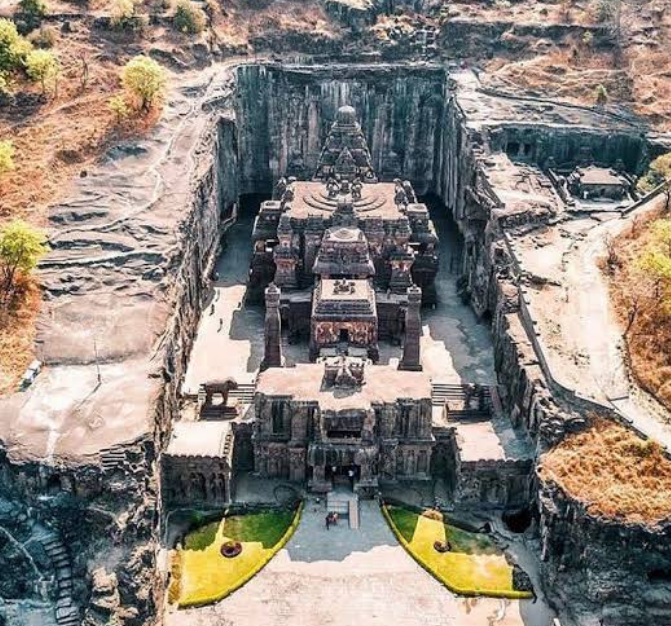
Ellora Caves, India
Thirty-four caves carved from living basalt rock over 500 years (600-1100 CE), representing three religions side by side. The Kailasa Temple (Cave 16) is the largest monolithic rock excavation in the world — carved from the top down, removing an estimated 200,000 tons of rock.
Cappadocia Cave Churches, Turkey
Early Christians fleeing persecution carved entire underground cities and churches into Cappadocia's soft volcanic tuff. The Göreme Open Air Museum contains rock-cut churches with vivid frescoes dating to the 10th-12th centuries.
Wieliczka Salt Mine Chapel, Poland
240 meters underground, the Chapel of St. Kinga is carved entirely from rock salt — including the chandeliers, altar, and relief sculptures. Miners created this space over generations as a place to pray before their dangerous work.
Lalibela, Ethiopia
Eleven churches carved from living rock in the 12th century, connected by underground tunnels. They were designed to be a "New Jerusalem" when the original was unreachable.
Western Wall Tunnels, Jerusalem
Beneath the visible Wall lies a hidden tunnel extending along the full 488-meter length of the Temple Mount's western wall. Walking through these tunnels, you're level with the original Temple foundations from 2,000 years ago.
Why Underground?
Underground sacred spaces share common qualities: constant temperature, profound silence, filtered light, and a sense of being held by the Earth itself. These qualities naturally promote the contemplation, stillness, and awe that spiritual practice seeks.
Descending into the Divine
While most sacred architecture reaches upward — spires, minarets, stupas pointing toward heaven — some of the world's most powerful spiritual spaces go in the opposite direction. Underground sacred sites tap into something primal in the human psyche: the descent into darkness, the enclosure of stone, the silence of the deep earth. These spaces evoke the womb, the tomb, and the threshold between the visible world and whatever lies beneath. From prehistoric cave temples to modern catacombs, the subterranean sacred represents a distinct and deeply affecting category of holy site.
Prehistoric Cave Sanctuaries
The earliest known sacred spaces are caves. The painted caves of Lascaux and Chauvet in France, dating to 17,000 and 36,000 years ago respectively, contain artwork so sophisticated and so deliberately placed in the darkest, most inaccessible chambers that they are almost certainly ritual spaces rather than mere galleries. The journey into the cave — sometimes requiring crawling through narrow passages for hundreds of meters — was itself part of the ritual. Acoustic research has revealed that many painted cave chambers possess remarkable resonant properties, suggesting that chanting or drumming was part of prehistoric cave ceremonies. The experience of entering these chambers by torchlight, surrounded by art that was ancient when the pyramids were new, is among the most profound archaeological experiences available.
The Catacombs of Rome
The Roman catacombs constitute the largest underground burial complex in the world, with over 40 catacomb networks containing an estimated 500,000 to 750,000 graves spread across more than 150 kilometers of tunnels. These were not hiding places for persecuted Christians (a popular misconception) but communal cemeteries developed from the 2nd century CE onward. However, they did serve as sites of worship — mass was celebrated at the tombs of martyrs, a practice that eventually gave rise to the tradition of placing relics beneath church altars. The Catacombs of San Callisto, San Sebastiano, and Priscilla are open to visitors and contain some of the earliest Christian art in existence, including the oldest known image of the Virgin Mary (in the Catacomb of Priscilla, dating to the mid-2nd century).
Lalibela's Rock-Hewn Churches
Ethiopia's Lalibela complex comprises 11 medieval churches carved directly downward into volcanic rock, connected by a labyrinth of tunnels, trenches, and ceremonial passages. Built in the 12th and 13th centuries under King Lalibela (who intended to create a "New Jerusalem"), the churches are not built up but excavated down — each one carved from the surrounding rock as a monolithic structure. The most famous, Bete Giyorgis (Church of St. George), is carved in the shape of a cross and sits in a pit 12 meters deep, accessible only through a narrow trench in the rock. Ethiopian Orthodox Christians consider Lalibela a holy city second only to Axum, and the churches remain active places of worship where white-robed priests perform services echoing liturgical traditions that date to the 4th century.
Derinkuyu: The Underground City
In the Cappadocia region of Turkey, the underground city of Derinkuyu extends 85 meters below the surface across eight levels, with capacity for approximately 20,000 people plus their livestock and food stores. While primarily a refuge from invasion (first used by early Christians fleeing Roman persecution, later from Arab raids), Derinkuyu contained multiple churches, a religious school, and a baptistery, making it a fully functional underground sacred community. The engineering is remarkable: ventilation shafts, wells, rolling stone doors, and strategically placed water channels demonstrate sophisticated planning and construction capabilities.
The Western Wall Tunnels, Jerusalem
While the exposed Western Wall (Kotel) is Judaism's holiest accessible site, the Western Wall Tunnels extend 488 meters along the continuation of the wall underground, revealing the full scale of Herod's Temple Mount construction. The tunnels contain a spot identified as the closest accessible point to where the Holy of Holies once stood in the Temple — traditionally the location of the Foundation Stone, the spiritual center of the world in Jewish cosmology. The experience of standing in these tunnels, touching stones placed 2,000 years ago, and praying at the point nearest to the Temple's most sacred chamber is one of the most powerful experiences in Jewish spiritual life.
Batu Caves: A Hindu Temple in a Limestone Cavern
The Batu Caves complex near Kuala Lumpur, Malaysia, centers on a massive limestone cavern 100 meters above ground, reached by climbing 272 steps (recently painted in a rainbow of colors). The Temple Cave inside contains several Hindu shrines established in 1891, and the annual Thaipusam festival brings over a million devotees who ascend the steps while performing kavadi — elaborate physical penances involving skewers and hooks — as acts of devotion. The combination of the natural limestone cathedral and the intensity of Hindu worship creates a uniquely powerful sacred space.
The Psychology of Underground Sacred Spaces
There are neurological reasons why underground spaces evoke such powerful spiritual responses. Sensory deprivation in dark, enclosed environments reduces external stimulation and promotes introspective states associated with meditation and contemplative prayer. The temperature stability of underground spaces (typically 12-18 degrees Celsius regardless of season) creates a physical sensation of timelessness. And the knowledge that one is surrounded by stone — enclosed within the body of the earth — triggers a sense of containment and protection that psychologists associate with the earliest experiences of safety. Religious traditions have intuitively understood these effects for millennia, creating underground sacred spaces that leverage the unique psychology of depth to facilitate spiritual experience.

