12 Spiritual Travel Destinations for 2026 — Sacred Journeys Worth Making This Year
From silent meditation retreats in Myanmar to pilgrimage trails in Japan and sacred festivals in India, the most meaningful spiritual journeys to plan for 2026.

Author & Researcher
Why 2026 Is a Remarkable Year for Spiritual Travel
Spiritual travel has shifted. The pandemic years redirected millions of people toward questions of meaning, purpose, and inner life — and the result has been a sustained surge in pilgrimage and contemplative travel that shows no sign of slowing. Holy sites that once drew mainly devotees now welcome a broader spectrum of visitors seeking silence, perspective, and encounters with traditions far older than the modern wellness industry.
This guide focuses not on the most famous sacred places (see our list of the most sacred places in the world for that) but on the most rewarding spiritual travel experiences available right now — the destinations where timing, access, and depth of experience converge to make 2026 a particularly good year to go.
1. The Shikoku 88 Temple Pilgrimage — Japan
Japan's greatest pilgrimage circuit covers 1,200 kilometres around the island of Shikoku, connecting 88 Buddhist temples associated with the monk Kukai (Kobo Daishi), founder of the Shingon sect. Walking the full circuit takes 30 to 60 days, but you can walk shorter sections — the coastal paths of Kochi Prefecture and the mountain temples of Tokushima are particularly beautiful.
What makes Shikoku special in 2026 is the quality of the infrastructure. The pilgrimage has been walked continuously for over 1,000 years, and the network of temple lodgings (shukubo), trail markers, and local hospitality (osettai — the tradition of giving food and shelter to pilgrims) makes it one of the most accessible long-distance pilgrimages in the world. Unlike the Camino de Santiago, Shikoku is never crowded. You will walk entire days encountering no other pilgrims.
For those interested in Japanese sacred architecture, our guide to the world's oldest temples provides historical context for many of the structures you will encounter along the way.
2. Vipassana Meditation Retreat — Myanmar or Thailand
A ten-day silent Vipassana retreat is one of the most demanding and transformative spiritual experiences available to non-monastics. The technique — systematic observation of bodily sensations as taught by S.N. Goenka — requires ten days of silence, 10+ hours of daily meditation, no reading, writing, or communication, and a strict schedule beginning at 4:30 AM.
Myanmar's meditation centres — particularly Mahasi Sasana Yeiktha in Yangon and Pa-Auk Forest Monastery — offer the deepest traditional practice environments. Thailand's Wat Suan Mokkh in Surat Thani and Wat Pah Nanachat in Ubon Ratchathani are more accessible to international visitors. All operate on a donation basis. The experience is free, which makes it one of the most democratically accessible spiritual journeys in the world.
For a broader look at contemplative practice at holy sites, see our guide to meditation retreats at Buddhist temples.
3. Kumbh Mela — Prayagraj, India (Next major gathering: 2025-2026)
The Kumbh Mela is the largest peaceful gathering in human history. Held in rotation at four sacred river sites in India, the full Maha Kumbh Mela at Prayagraj (formerly Allahabad) draws over 100 million pilgrims over several weeks. The 2025-2026 cycle makes this year particularly significant. Hindu pilgrims bathe at the sangam — the confluence of the Ganges, Yamuna, and mythical Saraswati rivers — believing the act washes away sins and breaks the cycle of rebirth.
Even for non-Hindu visitors, the Kumbh Mela is an extraordinary spectacle: processions of sadhus (holy men), the Naga ascetics who march naked and ash-covered to the river, the tent cities that house millions, and the sheer scale of collective devotion. Nothing else in world religion comes close to this scale.
4. Mount Athos — Greece
The monastic republic of Mount Athos on the Halkidiki peninsula is one of the most restricted and spiritually intense places in the Christian world. Home to 20 Eastern Orthodox monasteries, some dating to the 10th century, Athos has been continuously inhabited by monks for over 1,000 years. Only male visitors are admitted, and a permit (diamonitirion) must be obtained in advance — only 10 non-Orthodox visitors are admitted per day.
Those who gain access enter a world that has changed remarkably little since the Byzantine era. The monasteries follow the Julian calendar, keep Byzantine time, and maintain a daily cycle of prayer, work, and communal meals that has continued unbroken for centuries. Staying overnight in a monastery — rising at 3 AM for vigil services in candlelit churches decorated with medieval frescoes — is among the most immersive spiritual experiences available in Europe.
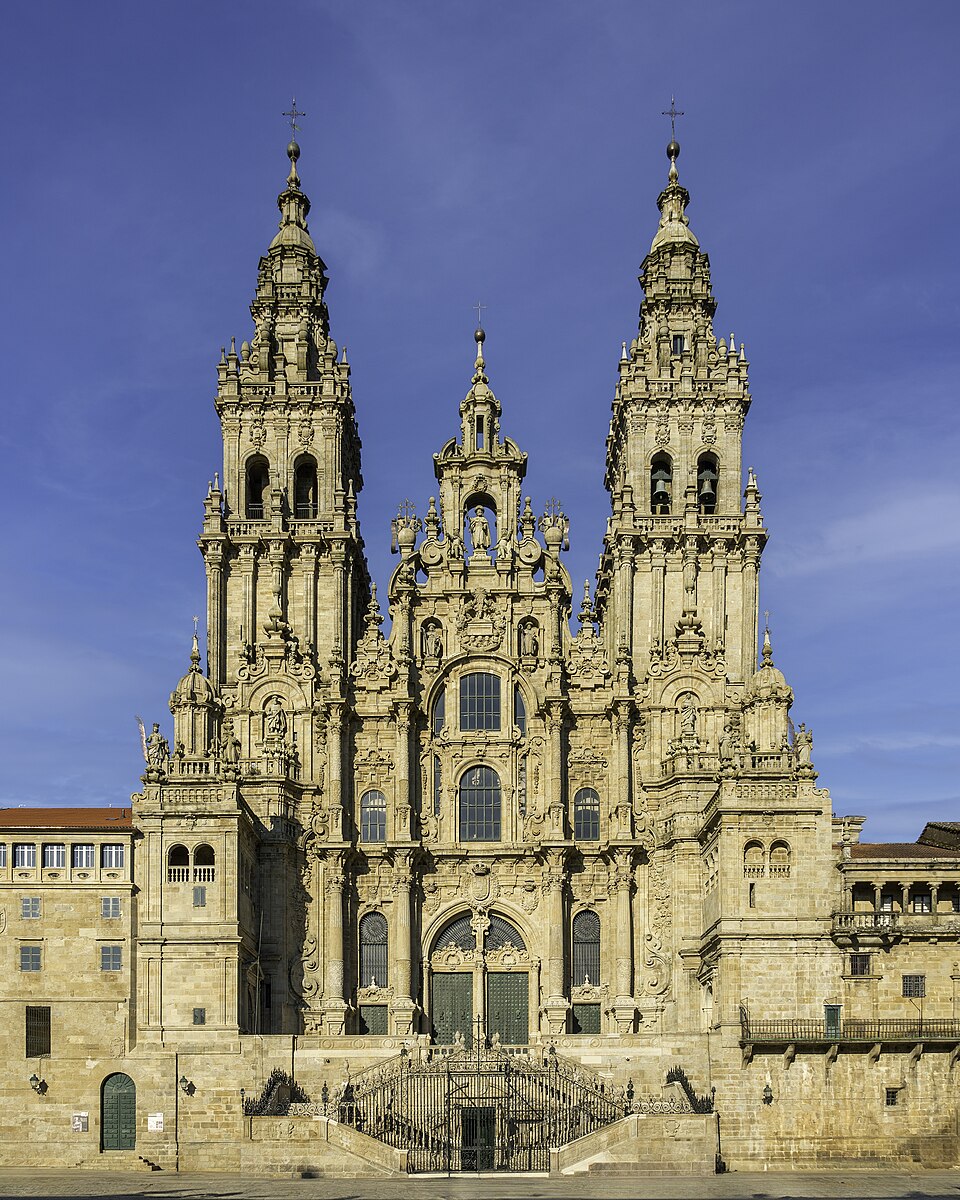
5. The Camino de Santiago — Spain
The Camino remains the most popular pilgrimage in the Western world, and 2026 continues the post-pandemic surge in walker numbers. The classic Camino Francés from Saint-Jean-Pied-de-Port to Santiago de Compostela covers 800 kilometres in approximately 30 days. But the Camino Portugués (from Lisbon or Porto), the Camino del Norte (along the northern coast), and the Via de la Plata (from Seville) offer less-crowded alternatives.
For detailed route planning, see our complete Camino de Santiago beginner's guide. The Camino's genius is its simplicity: walk, eat, sleep, repeat. The spiritual dimension emerges not from any single sacred site but from the accumulated effect of days and weeks of walking — the gradual quieting of the mind, the conversations with fellow pilgrims, and the rhythm of a life stripped to its essentials.
6. Varanasi — India
India's holiest city is not a destination you visit casually. Varanasi assaults every sense simultaneously — the cremation fires at Manikarnika Ghat burn continuously, the narrow lanes teem with pilgrims and wandering cattle, the dawn Ganga Aarti on the riverbank is a sensory overwhelm of fire, bells, incense, and chanting. It is, by any measure, the most intense sacred city in the world.
The spiritual reward is proportional to the intensity. Witnessing the cycle of life and death that plays out openly on the ghats — pilgrims bathing in the Ganges alongside floating marigold offerings and funeral pyres — forces a confrontation with mortality that most modern life carefully avoids. Many visitors describe Varanasi as the most profound travel experience of their lives.
7. Lalibela — Ethiopia
The eleven rock-hewn churches of Lalibela, carved directly downward into volcanic tuff in the 12th and 13th centuries, are among the most extraordinary sacred structures on earth. The Church of St. George — a perfect cruciform carved 15 metres below ground level — is the most photographed, but the entire complex, connected by underground tunnels and trenches, forms a sacred landscape that was deliberately designed as a "New Jerusalem" by King Lalibela after the Muslim conquest made pilgrimage to the Holy Land impossible.
What makes Lalibela particularly compelling in 2026 is the ongoing restoration work, which has removed the controversial UNESCO-installed protective shelters from several churches, revealing their original relationship with the landscape for the first time in over a decade. The Ethiopian Orthodox services held inside these churches — with ancient liturgical chanting, incense, and processional crosses — are among the most moving religious ceremonies in the Christian world.
8. The Western Wall and Old City — Jerusalem
No holy site in the world carries as much accumulated spiritual weight as the Western Wall. The last surviving remnant of the Second Temple destroyed by Rome in 70 CE, the Wall has been a site of Jewish prayer and pilgrimage for nearly two thousand years. The experience of placing a hand on the ancient stone — warm from the sun, smoothed by millions of hands before yours — while surrounded by worshippers in prayer is deeply affecting regardless of your faith tradition.
The Old City of Jerusalem, compressing Judaism's Western Wall, Christianity's Church of the Holy Sepulchre, and Islam's Dome of the Rock and Al-Aqsa Mosque into less than one square kilometre, is the most spiritually dense place on the planet. For a deeper exploration, see our guide to Jerusalem's three faiths.
9. Bodh Gaya — India
The site of the Buddha's enlightenment, marked by the Mahabodhi Temple and the descendant of the original Bodhi tree under which Siddhartha Gautama sat, is Buddhism's most sacred place. The temple complex draws monastics and lay practitioners from every Buddhist tradition — Tibetan, Theravada, Zen, Pure Land — and the juxtaposition of their different practices and architectural styles around this single site provides a visible map of how Buddhism has diversified across cultures over 2,500 years.
The meditation practice opportunities at Bodh Gaya are exceptional. The Root Institute for Wisdom Culture and the Tergar Monastery both offer structured retreats, and the simple act of sitting beneath the Bodhi tree in meditation — in the exact spot where the historical Buddha is said to have attained enlightenment — has a power that even sceptical visitors find difficult to dismiss.
10. Mount Kailash Kora — Tibet
The three-day circumambulation (kora) of Mount Kailash is one of the most physically demanding and spiritually significant pilgrimages in any tradition. The mountain — regarded as sacred by Hindus, Buddhists, Jains, and practitioners of Bon — has never been climbed, and the 52-kilometre circuit around its base reaches over 5,600 metres at the Dolma La pass. Altitude sickness is a genuine risk, and the journey requires serious physical preparation.
For devout Tibetan Buddhists, completing 108 koras in a lifetime guarantees enlightenment. The landscape is otherworldly — the symmetrical peak, the turquoise waters of Lake Manasarovar, the vast Tibetan plateau stretching in every direction — and the physical difficulty of the circuit at extreme altitude strips away everything except the immediate present moment. This is pilgrimage at its most elemental.
11. Fes — Morocco
The spiritual capital of Morocco, Fes contains the world's oldest continuously operating university (the University of al-Qarawiyyin, founded in 859 CE) and one of the most labyrinthine medieval medinas in the Islamic world. The spiritual life of the city centres on its mosques and zawiyas (Sufi lodges), where the mystical tradition of Sufism — Islam's contemplative path — has been practised for centuries.
Non-Muslim visitors cannot enter the mosques, but the medina itself functions as a kind of sacred architecture — the narrow streets, the hidden courtyards, the sound of the call to prayer echoing from multiple minarets simultaneously, and the rhythms of daily life organised around the five daily prayers create an immersive encounter with living Islamic culture that is increasingly rare in the modern world.
12. Iona — Scotland
The tiny Hebridean island of Iona — just 5 kilometres long — has been a centre of Celtic Christianity since St. Columba founded a monastery here in 563 CE. The island's monastery (rebuilt in the 20th century but on the original site) hosts a residential ecumenical community, and visitors can join in the daily rhythm of worship, work, and communal meals.
What makes Iona extraordinary is its combination of historical depth and natural beauty. The island's white-sand beaches, clear Atlantic waters, and enormous skies create a landscape that feels genuinely set apart from the modern world. The Celtic Christian tradition that originated here — with its emphasis on the presence of God in nature, its artistic tradition of illuminated manuscripts (the Book of Kells was likely begun on Iona), and its contemplative spirituality — offers an approach to faith that many contemporary seekers find more accessible than institutional religion.
Planning Your Spiritual Journey
The most important preparation for spiritual travel is not logistical but internal. Set a clear intention before departure. What are you seeking — peace, clarity, perspective, healing, encounter with the sacred? The intention shapes the journey more than the destination.
Practically, allow more time than you think you need. Spiritual travel rewards slowness. A week in Varanasi teaches more than a day at ten holy sites. A 30-day Camino transforms in ways that a five-day walking holiday cannot.
For destination-specific guidance, explore our guides to visiting holy sites as a non-believer, photographing sacred sites respectfully, and the best time to visit each holy site. And browse our complete collection of the world's holy sites to plan your journey.

