Most Sacred Places in the World — 25 Holy Sites Every Pilgrim Should Visit
From the Western Wall in Jerusalem to the temples of Angkor Wat, these are the 25 holy sites that draw pilgrims of every faith — and what makes each one so spiritually significant.

Author & Researcher
The World's Most Sacred Places
Sacred sites are the physical anchors of humanity's spiritual life. For thousands of years, people of every culture have identified certain places — mountains, rivers, temples, tombs, cathedrals — as points of contact between the human and the divine. These are the 25 holy sites that have drawn pilgrims across centuries and across every major religious tradition.
1. Mecca, Saudi Arabia (Islam)
The holiest city in Islam is closed to non-Muslims, but for the estimated 1.8 billion Muslims worldwide, Mecca is the spiritual center of existence. The Masjid al-Haram mosque — the largest in the world — surrounds the Kaaba, the cube-shaped structure that Muslims believe was built by Ibrahim and his son Ismail as the first house of worship. Every year, between two and three million pilgrims perform the Hajj here — the most structured and precisely choreographed religious gathering in history. The black stone set into the Kaaba's eastern corner is believed to date to the time of Adam and Eve.
2. Jerusalem, Israel/Palestine (Judaism, Christianity, Islam)
No city on earth is contested by as many faiths as Jerusalem. The Western Wall — the last surviving remnant of the Second Temple destroyed by Rome in 70 CE — is the holiest accessible site in Judaism. Above it on the Temple Mount sits the Dome of the Rock and Al-Aqsa Mosque, among the holiest sites in Islam. The Church of the Holy Sepulchre, built over the site of Jesus's crucifixion and resurrection, is Christianity's most sacred church. All three Abrahamic faiths trace their connection to this one small city, making Jerusalem unlike any other place on earth.
3. Varanasi, India (Hinduism)
The oldest continuously inhabited city in the world — and arguably the world's holiest — Varanasi sits on the banks of the Ganges in Uttar Pradesh. Hindus believe that dying in Varanasi and having one's ashes scattered in the Ganges grants moksha (liberation from the cycle of rebirth). The burning ghats at Manikarnika and Harishchandra operate continuously, with cremations conducted in the open air on the riverbank. The Kashi Vishwanath Temple, dedicated to Shiva, draws millions of devotees. Every morning, the Ganga Aarti — a ritual of fire, incense, and bells on the riverbank — is performed at dawn.
4. The Vatican, Rome (Christianity)
The world's smallest sovereign state is also the spiritual and administrative center of the Roman Catholic Church, with 1.3 billion adherents. St Peter's Basilica, built over the tomb of the Apostle Peter, is the largest church in the world and one of architecture's supreme achievements. Michelangelo's Pietà, Bernini's baldachin, and the dome that defined European architecture for four centuries are all here. The Sistine Chapel, painted by Michelangelo between 1508 and 1512, is one of the most visited rooms in the world. For Catholics, an audience with the Pope in St Peter's Square is among the most significant spiritual experiences available.
5. The Golden Temple (Harmandir Sahib), Amritsar, India (Sikhism)
The holiest shrine in Sikhism sits at the center of a sacred pool (the Amrit Sarovar) in Punjab. The temple's gold-clad exterior — literally covered in 750 kilograms of gold leaf — reflects in the water around it. Inside, the Guru Granth Sahib (Sikhism's holy scripture) is recited continuously by teams of musicians (ragis). The langar (community kitchen) serves free vegetarian meals to everyone regardless of religion or background — up to 100,000 people per day. The Golden Temple is one of the most welcoming major holy sites in the world, open to visitors of all faiths.
6. Bodh Gaya, India (Buddhism)
The site where Siddhartha Gautama attained enlightenment under the Bodhi Tree is the holiest place in Buddhism. The Mahabodhi Temple, a UNESCO World Heritage site, was originally built by Emperor Ashoka in the 3rd century BCE and rebuilt multiple times since. A direct descendant of the original Bodhi Tree still stands beside the temple. Pilgrims from Theravada, Mahayana, and Vajrayana Buddhist traditions — from Sri Lanka, Japan, Tibet, Thailand, and Myanmar — all come here, making Bodh Gaya one of the most diverse gatherings of Buddhist practice in the world.
7. Medina, Saudi Arabia (Islam)
The second holiest city in Islam contains Al-Masjid an-Nabawi — the Prophet's Mosque — built on the site of Muhammad's home and containing his tomb. Like Mecca, Medina is closed to non-Muslims. For Muslims, visiting the Prophet's Mosque is one of the most significant acts of devotion, and millions visit each year, many in combination with the Hajj.
8. Mount Sinai, Egypt (Judaism, Christianity, Islam)
The mountain where Moses received the Ten Commandments is sacred to three Abrahamic faiths. The traditional summit (Jebel Musa) in Egypt's Sinai Peninsula is reached by a path of 3,750 steps, and pilgrims routinely make the pre-dawn climb to watch sunrise from the summit. The Monastery of St Catherine at the mountain's base, built in the 6th century CE, contains the oldest continuously operating library of Christian manuscripts in the world.
9. Camino de Santiago, Spain (Christianity)
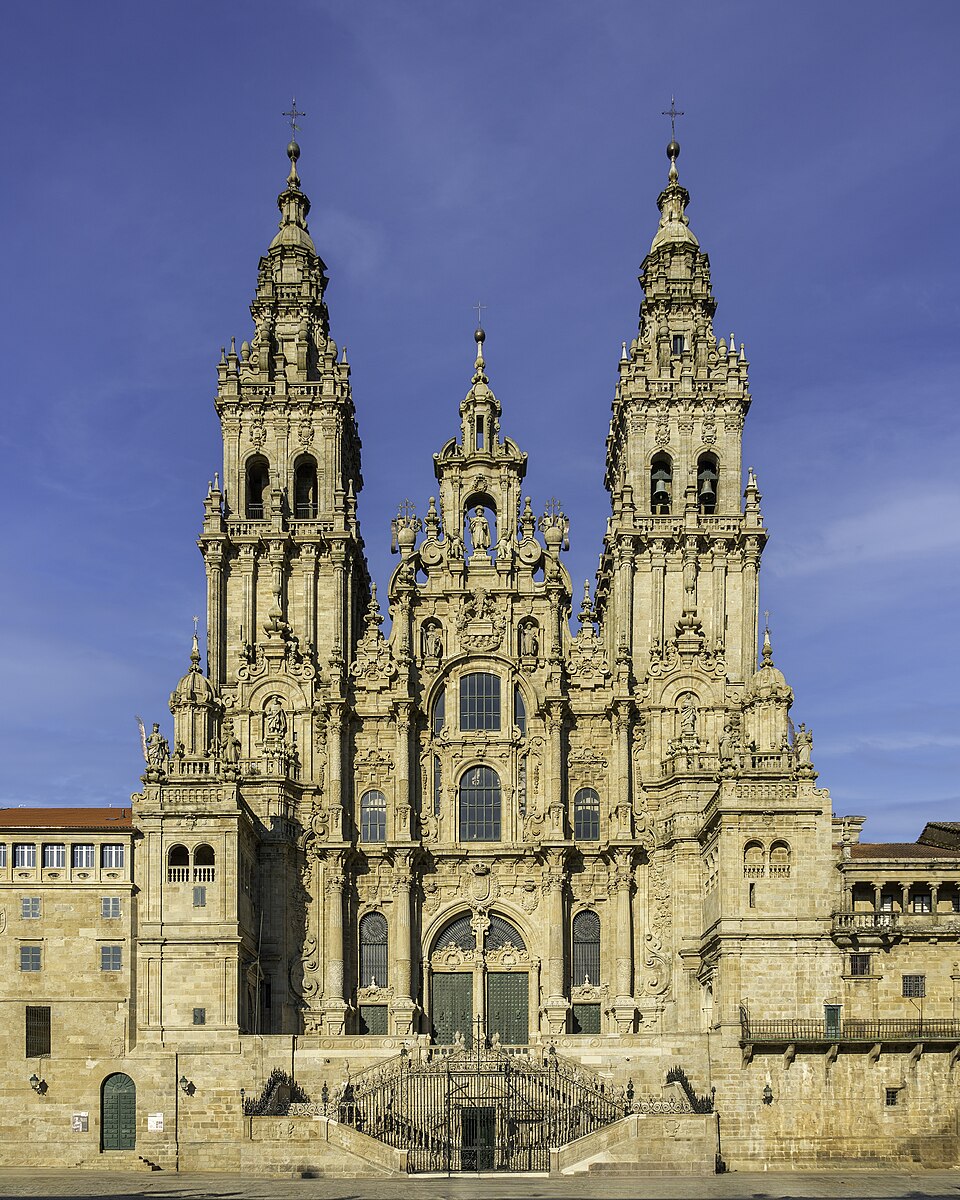
The network of pilgrimage routes converging on Santiago de Compostela in northwestern Spain is one of the most walked trails in the world. The Cathedral of Santiago de Compostela contains the tomb of St James the Apostle, and pilgrims have been arriving here since the 9th century. The most popular route — the Camino Francés — covers 800 kilometres from St Jean Pied de Port in France. More than 400,000 pilgrims complete the Camino annually, drawn by a combination of spiritual intention, physical challenge, and the remarkable community that forms on the road.
10. Lourdes, France (Christianity)
The small town in the French Pyrenees where 14-year-old Bernadette Soubirous reported visions of the Virgin Mary in 1858 has become the most visited Catholic pilgrimage site in Western Europe. Approximately six million pilgrims visit annually, many of them sick or disabled, seeking healing at the spring water that emerged from the grotto where the apparitions occurred. The Catholic Church has officially recognized 70 miraculous cures at Lourdes — a fraction of the thousands claimed.
11. Tirupati (Tirumala Venkateswara Temple), India (Hinduism)
The Tirumala Venkateswara Temple in Andhra Pradesh is the most visited place of worship in the world, receiving between 50,000 and 100,000 pilgrims daily — more than the Vatican and Mecca combined on most days. Dedicated to Vishnu, the temple is one of the wealthiest religious institutions on earth. Devotees offer gold, jewelry, and hair in dedication to the deity. The queues to enter the inner sanctum can stretch for twelve hours, yet pilgrims wait without complaint, considering the wait itself a form of devotion.
12. The Ganges River, India (Hinduism)
The Ganges is not a single holy site but a 2,525-kilometre holy river, sacred to Hinduism along its entire length. From its source at Gangotri Glacier in the Himalayas to its confluence with the sea at the Bay of Bengal, the Ganges is regarded as the physical embodiment of the goddess Ganga. Bathing in the Ganges at auspicious times — particularly during Kumbh Mela, the world's largest religious gathering — is believed to cleanse accumulated karma. The river's ecological health has become a major concern, but its spiritual significance remains undiminished for hundreds of millions of Hindus.
13. Lalibela, Ethiopia (Christianity)
The eleven rock-hewn churches of Lalibela, carved from solid red volcanic rock in the 12th and 13th centuries by King Lalibela, are among the most extraordinary religious monuments ever created. Lalibela is often called the "New Jerusalem" — the churches were reportedly built as a pilgrimage alternative for Ethiopian Christians who could not reach the Holy Land. The churches are still active places of worship, and Ethiopian Orthodox priests in white robes conduct services among pilgrims who have walked for days to reach them. At Christmas (Genna, celebrated on 7 January by the Julian calendar), the site receives tens of thousands of pilgrims.
14. Angkor Wat, Cambodia (Hinduism, Buddhism)
The largest religious monument in the world was built as a Hindu temple to Vishnu in the early 12th century, then converted to Theravada Buddhism in the late 13th century. The transition is visible in the architecture: the original Hindu iconography was supplemented with Buddhist imagery and eventually the temple became the country's primary Buddhist pilgrimage site. Angkor Wat is also the symbol of Cambodia itself, appearing on the national flag. The complex, with its five distinctive towers representing Mount Meru (the Hindu cosmic mountain), covers 400 acres and is surrounded by a moat 190 meters wide.
15. Mount Kailash, Tibet (Hinduism, Buddhism, Jainism, Bön)
The most sacred mountain on earth is sacred to four religions simultaneously. Hindus regard it as the home of Shiva; Buddhists as the cosmic navel of the universe and the abode of Demchok; Jains as the mountain where Rishabha (the first Tirthankara) attained liberation; and followers of the indigenous Tibetan Bön religion as the throne of Sky Goddess Sipaimen. No one has ever climbed Mount Kailash — it is forbidden by all four traditions — but pilgrims perform the 52-kilometre kora (circumambulation) around it, at altitudes reaching 5,630 metres.
16. Jerusalem's Temple Mount / Al-Aqsa, Jerusalem
Distinct from the Western Wall below it, the Temple Mount (Har HaBayit in Hebrew, Haram esh-Sharif in Arabic) is among the most contested and spiritually charged areas on earth. For Jews, it is the site of both the First and Second Temples, and the holiest site in Judaism — though many do not ascend out of religious obligation. For Muslims, the Dome of the Rock marks the spot from which Muhammad ascended to heaven during the Night Journey, and Al-Aqsa Mosque is the third holiest site in Islam. The tension between these claims has shaped Middle Eastern history for centuries.
17. The Western Wall, Jerusalem (Judaism)
The 488-metre-long western retaining wall of the Temple Mount is the holiest place where Jews are permitted to pray. Prayers are offered continuously, and notes with written prayers are inserted into the cracks between the ancient stones. On major Jewish holidays — Rosh Hashanah, Yom Kippur, Pesach — hundreds of thousands gather at the Wall. The area was inaccessible to Jews between 1948 and 1967; the reunification of Jerusalem in the Six-Day War and the return to the Wall is one of the most emotionally charged moments in modern Jewish history.
18. The Ganges at Rishikesh and Haridwar, India (Hinduism)
If Varanasi is where the Ganges receives the dead, Rishikesh and Haridwar — where the river emerges from the Himalayas into the plains — are where it is worshipped in its pristine mountain form. Haridwar's Har Ki Pauri ghat is considered one of the most auspicious bathing sites in all of Hinduism. The evening Ganga Aarti at both sites — fire, flowers, and song offered to the river — is among the most atmospheric religious ceremonies in Asia. Rishikesh, upstream, is the yoga capital of the world and a centre of ashram culture since the 19th century.
19. Shwedagon Pagoda, Yangon, Myanmar (Buddhism)
The 99-metre-tall golden pagoda in Yangon is the most sacred Buddhist site in Myanmar and one of the most visually spectacular religious monuments in the world. The central stupa is said to enshrine relics of four Buddhas, including eight hairs of Gautama Buddha. The entire structure is covered in gold leaf — renewed regularly by donations from Myanmar's Buddhist community — and the tip is encrusted with 5,448 diamonds and 2,317 rubies. Evening at the Shwedagon, when the pagoda glows against the night sky, is one of the most extraordinary spectacles in Southeast Asia.
20. Chartres Cathedral, France (Christianity)
The Cathedral of Our Lady of Chartres, built between 1194 and 1220, is the most complete surviving Gothic cathedral in the world and one of the greatest achievements of medieval Christian architecture. The original Romanesque cathedral burned in 1194, but the veil of the Virgin Mary (the Sancta Camisia) survived — regarded as miraculous, the relic inspired the rapid rebuilding of the cathedral. The north and south rose windows, installed in the 13th century, are among the finest examples of medieval stained glass in existence. Chartres is also one of the world's great pilgrimage labyrinths — the pavement labyrinth in the nave, 13 metres in diameter, has been walked meditatively by pilgrims for 800 years.
21. Ajmer Sharif Dargah, India (Islam/Sufism)
The tomb of the Sufi saint Moinuddin Chishti in Rajasthan is one of the most visited Islamic shrines in South Asia, drawing millions of pilgrims annually from both Muslim and Hindu traditions. The Chishti order of Sufism, founded by Moinuddin Chishti, emphasizes divine love and music — qawwali performances at the dargah are among the most powerful devotional musical experiences in South Asia. The urs (annual death anniversary) of the saint draws pilgrims from across the subcontinent.
22. Potala Palace, Lhasa, Tibet (Buddhism)
The former winter palace of the Dalai Lamas, rising 13 stories above the Lhasa valley from the Red Mountain, is the most iconic symbol of Tibetan Buddhism. The Potala was built by the Fifth Dalai Lama in the 17th century on the site of an earlier palace built by Songtsen Gampo, Tibet's first Buddhist king. The palace contains thousands of rooms, chapels, and shrines, as well as the tombs of eight Dalai Lamas encased in gold and jewels. Since the 14th Dalai Lama's exile in 1959, it has functioned as a museum, but pilgrims prostrate on the road approaching it and perform circumambulation of the palace as a form of devotion.
23. Medjugorje, Bosnia-Herzegovina (Christianity)
Since 1981, when six children in this small Herzegovinian village reported visions of the Virgin Mary, Medjugorje has attracted between 1 and 3 million pilgrims annually — one of the most visited Marian shrines in the world. The Catholic Church has been cautious in its official response, but in 2024 approved the first limited pilgrimage recognitions. The site is particularly significant because the alleged apparitions are reported to have continued for decades — longer than any officially recognized Marian apparition in Catholic history.
24. The Bahá'í Shrines, Haifa and Acre, Israel (Bahá'í Faith)
The terraced gardens and golden-domed Shrine of the Báb on the slopes of Mount Carmel in Haifa, alongside the Shrine of Bahá'u'lláh near Acre, form the world centre of the Bahá'í Faith and one of the most architecturally striking religious complexes in the Middle East. The shrines are UNESCO World Heritage sites and receive pilgrims from all over the world. The Bahá'í tradition of unity — believing that all major religions share a common divine source — gives the shrines a universalist character that resonates beyond the faith's own estimated five to eight million adherents.
25. Mount Athos, Greece (Christianity)
The autonomous monastic peninsula in northern Greece — accessible only to men with special permits, and closed entirely to women — contains 20 Eastern Orthodox monasteries and is home to approximately 2,000 monks. Mount Athos has operated as a monastic republic since the 9th century and is regarded in Eastern Orthodoxy as the "Garden of the Theotokos" (the Virgin Mary). The monasteries contain extraordinary collections of Byzantine art, illuminated manuscripts, and sacred relics. For Orthodox Christians, visiting Mount Athos is one of the most significant spiritual acts available — a direct encounter with the living tradition of Byzantine Christianity.
Planning a Pilgrimage to Sacred Sites
Each of these sites has different requirements for visitors. Some — like Mecca and Medina — are closed to non-believers. Others — like the Golden Temple and most Buddhist temples — welcome everyone. Many require specific dress codes (modest clothing, covered shoulders, removed shoes). Some are best experienced at particular times — the Ganges Aarti at dawn and dusk, Lalibela at Christmas, the Hajj during the specific dates of the Islamic calendar.
The most important preparation for visiting any sacred site is intentionality. Come not as a tourist collecting photographs but as a respectful witness to a living tradition. Observe before you photograph. Sit in silence before you explore. The places on this list have absorbed centuries of prayer and devotion, and that accumulated spiritual weight is palpable to anyone who approaches them with an open mind.

