
Where Faiths Meet: Holy Sites Shared by Multiple Religions
Some of the world's most fascinating sacred places are claimed by two or more religions. Stories of shared worship and contested ground.
Sacred Sharing
In a world often divided by religious difference, some holy sites bring traditions together — sometimes harmoniously, sometimes contentiously. These shared sacred spaces reveal both the best and most complicated aspects of interfaith relations.
Hagia Sophia, Istanbul
Cathedral for 916 years, mosque for 481 years, museum for 86 years, mosque again since 2020. This building embodies the layered religious history of a city that has been the capital of both Christian and Islamic empires. Today, Byzantine mosaics of Christ and the Virgin Mary coexist with Islamic calligraphy praising Allah.
Temple Mount / Haram al-Sharif, Jerusalem
Perhaps the most contested sacred site on Earth. The holiest site in Judaism (where the Temple stood) and the third holiest in Islam (Al-Aqsa Mosque and Dome of the Rock). Access is governed by complex, frequently tense agreements.
Adam's Peak, Sri Lanka
The footprint at this mountain's summit is claimed by four religions: Buddhists say it's Buddha's footprint, Hindus attribute it to Shiva, Muslims and Christians believe it's Adam's first step after leaving Eden. All four groups pilgrimage here peacefully.
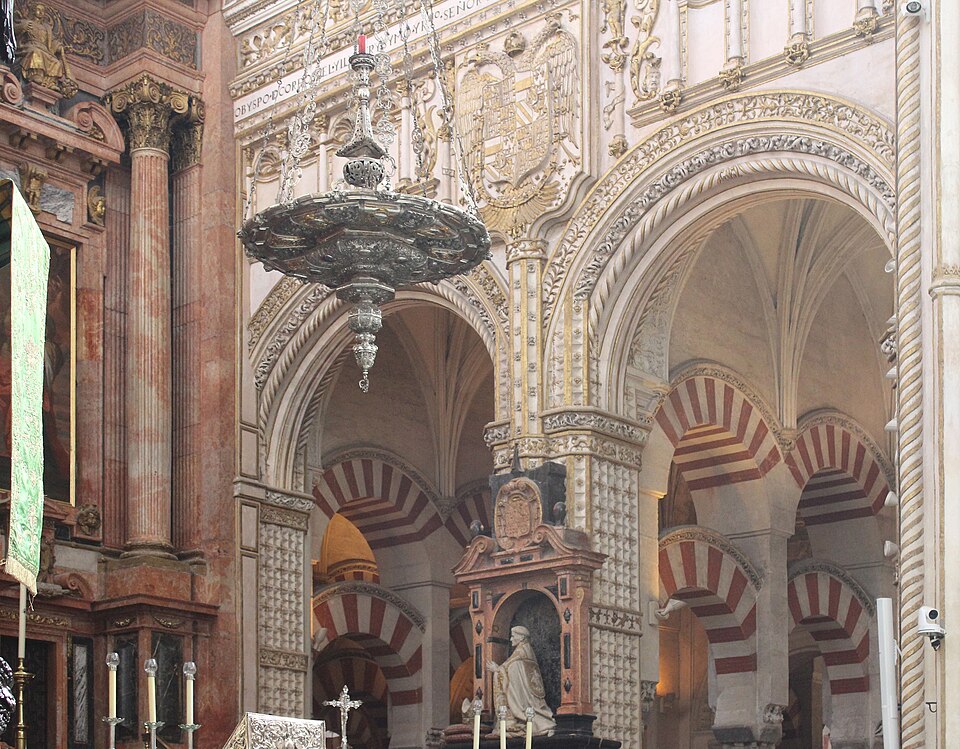
Mezquita of Córdoba, Spain
A Visigothic church became one of the world's greatest mosques, then had a Renaissance cathedral inserted into its center after the Reconquista. The result is architecturally jarring but historically fascinating — two religions sharing one building across a millennium.
Ajmer Sharif, India
This Sufi shrine in Rajasthan attracts Muslims, Hindus, Sikhs, and Christians alike. The saint Khwaja Moinuddin Chishti taught that love transcends religious boundaries — and his shrine proves him right daily.
What Shared Sites Teach Us
These places remind us that the sacred isn't owned by any single tradition. When we can share holy ground — however imperfectly — we demonstrate that the spiritual impulse uniting humanity is stronger than the doctrines that divide us.
Where Faiths Converge
In a world that often emphasizes religious conflict, interfaith holy sites offer a counternarrative of shared reverence and peaceful coexistence. These are places where different religious traditions worship at the same location — sometimes harmoniously, sometimes in complex arrangements born of history and politics, but always revealing something important about the human capacity to find common sacred ground. Understanding these sites challenges the assumption that religious differences necessarily lead to division.
Sites of Genuine Shared Worship
The Cave of the Patriarchs/Ibrahimi Mosque, Hebron
The Cave of Machpelah in Hebron is sacred to both Jews and Muslims as the burial place of Abraham/Ibrahim, Sarah, Isaac, Rebecca, Jacob, and Leah. The massive Herodian structure above the cave has served as both synagogue and mosque at different points in its 2,000-year history. Today, it is divided between Jewish and Muslim sections under a complex arrangement managed by the Israeli military, with the entire building opening to each faith on specific holidays. Despite being one of the most politically fraught sites in the Israeli-Palestinian conflict, the shared reverence for Abraham/Ibrahim makes it a powerful symbol of the common roots of Judaism, Christianity, and Islam.
The Church of the Holy Sepulchre, Jerusalem
While nominally a single-faith site (Christian), the Church of the Holy Sepulchre is shared among six denominations — Roman Catholic, Greek Orthodox, Armenian Apostolic, Syriac Orthodox, Ethiopian Orthodox, and Coptic Orthodox — in an arrangement so complex that the keys to the church have been held by a Muslim Palestinian family (the Nusseibeh and Joudeh families) since the 12th century, a neutral arrangement established by Saladin. The delicate balance between the six denominations is governed by the Status Quo, an 1853 agreement that freezes every detail of the building's use in place. The "immovable ladder" on a window ledge above the entrance — placed there before 1757 — remains because no denomination can move what another placed.
Hagia Sophia, Istanbul
For nearly a millennium (537-1453 CE), Hagia Sophia was the world's greatest cathedral. For 481 years (1453-1934), it was one of the world's most important mosques. For 86 years (1934-2020), it was a museum. In 2020, it was reconverted to a mosque, though it remains open to visitors of all faiths. The building contains both enormous Islamic calligraphic medallions and Byzantine Christian mosaics — the latter uncovered during the museum period and now partially concealed during prayer times. Whatever one's view of its current status, Hagia Sophia's physical fabric testifies to the layered spiritual history that makes Istanbul unique.
Sites of Parallel Worship
Adam's Peak (Sri Pada), Sri Lanka
As discussed in our article on multi-faith mountains, Adam's Peak is revered by Buddhists, Hindus, Muslims, and Christians simultaneously. The annual pilgrimage season (December-May) sees devotees of all four traditions climbing the same 5,500 steps to the same summit, where each tradition identifies the same footprint-shaped rock formation differently. The remarkable feature of Sri Pada is that there is no conflict: pilgrims of different faiths climb side by side, help each other on the steep ascent, and share tea at summit shelters without religious tension.
The Church of the Nativity, Bethlehem
Managed by a similarly complex arrangement to the Holy Sepulchre, the Church of the Nativity is shared among the Roman Catholic, Greek Orthodox, and Armenian Apostolic churches. The site is also sacred to Muslims, who revere Jesus (Isa) as one of Islam's greatest prophets. A mosque (the Mosque of Omar) stands adjacent to the church, built by Caliph Omar in the 7th century CE specifically to prevent his followers from praying inside the church (which might have led to its conversion to a mosque). This deliberate act of interfaith respect by a conquering military leader remains one of history's most remarkable gestures of religious coexistence.
What Interfaith Sites Teach Us
These sites demonstrate several important truths. First, religious traditions are far more interconnected than their adherents often acknowledge — Judaism, Christianity, and Islam share patriarchs, prophets, and sacred geography to a degree that makes their conflicts tragically ironic. Second, practical coexistence is possible even when theological agreement is not — the complex but functional sharing arrangements at the Holy Sepulchre and the Cave of the Patriarchs prove that different traditions can share sacred space when political will exists. Third, the impulse to sanctify certain places transcends religious boundaries — when multiple traditions independently identify the same location as holy, it suggests something about the place itself, not just the traditions that revere it.
Visiting Interfaith Sites
Visiting interfaith sacred sites requires heightened sensitivity. Dress and behavior expectations may vary between different sections of the same site. Political tensions may be palpable, particularly in Jerusalem and Hebron. The best approach is to visit with a knowledgeable local guide who can explain the multiple layers of meaning, respect the rules of each tradition you encounter, and resist the temptation to take sides in disputes that are far more complex than they appear to outsiders. The reward is an experience of sacred space that is richer, more layered, and more deeply human than any single-tradition site can offer.

