
Holy Water: Sacred Springs, Rivers, and Wells That Draw Millions
Water is central to every religion. From the Ganges to Zamzam, discover the world's most sacred water sources and their spiritual significance.
The Universal Sacred Element
Water appears in the creation myths and purification rituals of virtually every religion. It cleanses, heals, transforms, and connects the physical world to the spiritual. Here are the world's most sacred water sources.
The Ganges, India
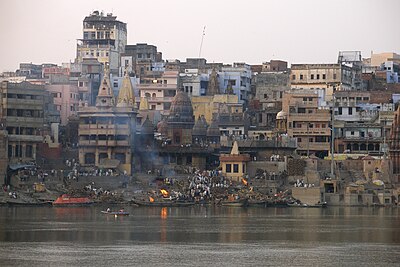
For Hindus, the Ganges is not just a river but a goddess — Ganga Ma. Bathing in her waters washes away sins. Having one's ashes scattered in the Ganges ensures liberation from the cycle of rebirth. Despite severe pollution, over 100 million people bathe in the river during the Kumbh Mela festival.
Zamzam Well, Mecca
According to Islamic tradition, this well sprang miraculously to save Hagar and her infant son Ishmael from dying of thirst. Located within the Masjid al-Haram, it has been flowing continuously for over 4,000 years. Pilgrims drink from it during Hajj.
The Jordan River
Sacred to Christians as the site where John the Baptist baptized Jesus. Pilgrims from around the world are baptized in its waters at Qasr el-Yahud (Al-Maghtas). Despite being reduced to a fraction of its historical flow, it remains Christianity's most sacred body of water.
Lourdes Spring, France
The spring that appeared during the 1858 Marian apparitions produces 45,000 liters daily. Over 7,000 unexplained healings have been documented. The water contains no unusual minerals or properties — its power is spiritual.
Lake Manasarovar, Tibet
At 4,590 meters, one of the highest freshwater lakes in the world. Located near Mount Kailash, it is sacred to Hindus, Buddhists, and Jains. A ritual bath here is believed to cleanse all sins.
Chalice Well, Glastonbury
This ancient spring at the base of Glastonbury Tor has never run dry in recorded history. Its iron-rich red waters are associated with the legend of the Holy Grail and are believed to have healing properties.
The Sacred Pattern
Water rituals appear in baptism, ablution (wudu), mikveh, misogi, and countless indigenous traditions. The message is universal: water cleanses not just the body but the soul.
The Universal Sanctity of Water
Water is the only substance considered sacred by virtually every religion and spiritual tradition on Earth. This near-universal reverence is not hard to understand: water is the prerequisite for all life, the substance of birth and cleansing, the boundary between land and the unknown depths. From the baptismal waters of Christianity to the sacred rivers of Hinduism, from the purification pools of Shinto to the holy wells of Celtic tradition, the association between water and the divine is one of humanity's oldest and most persistent spiritual intuitions.
Sacred Rivers
The Ganges (Ganga), India
The Ganges is the holiest river in Hinduism, personified as the goddess Ganga who descended from heaven to earth. Bathing in the Ganges is believed to wash away sins, and having one's ashes scattered in the river after death is believed to liberate the soul from the cycle of reincarnation. Varanasi's ghats (stepped riverbanks) are the most sacred bathing points, particularly at the confluence of the Ganges, Yamuna, and mythical Saraswati rivers at Allahabad (Prayagraj), where the Kumbh Mela draws over 100 million pilgrims. Despite severe pollution from industrial and urban sources, the Ganges' spiritual significance is undiminished, and the Indian government has invested billions in cleanup efforts.
The Jordan River, Israel/Palestine/Jordan
The Jordan River holds unique significance for all three Abrahamic faiths. Judaism remembers it as the river the Israelites crossed to enter the Promised Land. Christianity reveres it as the river where John the Baptist baptized Jesus — an event so foundational that baptism became the universal Christian initiation rite. Islam honors the Jordan's mention in the Quran and the prophetic traditions associated with the region. Today, the baptismal site at Qasr el-Yahud (on the West Bank/Israeli side) and Al-Maghtas (on the Jordanian side, a UNESCO World Heritage Site) welcome thousands of pilgrims who wade into the river for baptism or spiritual renewal.
The Yamuna, India
The Yamuna, a major tributary of the Ganges, is sacred in its own right as the river associated with Lord Krishna. Vrindavan and Mathura, sacred cities on the Yamuna's banks, are among the most important pilgrimage destinations in Vaishnavite Hinduism. The river's association with Krishna's childhood stories — his playful interactions with the milkmaids (gopis), his defeat of the serpent Kaliya — gives the Yamuna a character of divine playfulness and grace distinct from the Ganges' associations with death and liberation.
Sacred Springs and Wells
The Zamzam Well, Mecca
According to Islamic tradition, the Zamzam well miracuously appeared when the infant Ishmael struck his foot on the ground while his mother Hagar desperately searched for water in the desert. The well, located within the Masjid al-Haram compound, has provided water continuously for over 4,000 years according to tradition. Zamzam water is considered blessed and is drunk by every Hajj pilgrim. Geologists note that the well draws from a unique aquifer that has maintained consistent water quality and flow rate for as long as records exist.
Lourdes Spring, France
The spring at the Grotto of Massabielle in Lourdes appeared when Bernadette Soubirous, following instructions from the Virgin Mary in an 1858 apparition, dug in the muddy ground. Since then, over 200 million people have bathed in or drunk the spring water. While the 70 officially recognized miraculous healings at Lourdes are attributed to divine intervention rather than the water itself, the spring has become one of the most powerful symbols of faith healing in Christianity. The Lourdes Medical Bureau subjects claimed cures to rigorous scientific investigation.
Chalice Well, Glastonbury, England
Located at the foot of Glastonbury Tor, the Chalice Well produces iron-rich reddish water that has flowed continuously for at least 2,000 years. Christian legend associates it with the Holy Grail — Joseph of Arimathea is said to have hidden the chalice used at the Last Supper in the well. Pre-Christian Celtic tradition considered the spring sacred to the goddess of the land. Today the well is maintained as a multi-faith sanctuary and its gardens are one of England's most peaceful sacred spaces.
Ritual Bathing Traditions
Mikveh (Judaism)
The mikveh is a ritual bath used for spiritual purification, fed by natural water sources (rainwater, spring water, or river water connected to the mikveh basin). Mikveh immersion is required for conversion to Judaism, traditionally practiced by women after menstruation, and observed by many Jewish men before Shabbat. The discovery of ancient mikva'ot (plural) at archaeological sites, including near the Temple Mount in Jerusalem, demonstrates the antiquity and importance of this practice.
Misogi (Shinto)
Shinto purification through water (misogi) ranges from the simple hand-and-mouth washing at shrine entrances (temizu) to standing under sacred waterfalls (takigyō) — a practice that can last from minutes to hours, sometimes in near-freezing temperatures. Practitioners describe the experience as a radical cleansing of mind and body that creates a state of heightened spiritual receptivity.
Tirtha (Hinduism)
The concept of tirtha — literally "crossing place" or "ford" — refers to locations where the boundary between the physical and spiritual worlds is thin enough to cross. Rivers, confluences, springs, and lakes are the primary tirthas, and bathing at these sites is one of the most important practices in Hinduism. The act of ritual bathing (snana) is understood not merely as physical cleansing but as a crossing over from a state of spiritual impurity to one of divine connection.
The Science of Sacred Water
While the spiritual claims for holy water lie beyond scientific verification, some sacred water sources do possess unusual measurable properties. Studies have found elevated mineral content in many healing springs, reduced bacterial counts in some pilgrimage water sources (possibly due to the antibacterial properties of certain minerals or natural UV exposure), and unique isotopic signatures that distinguish them from ordinary groundwater. None of this explains the spiritual experiences reported by pilgrims, but it suggests that the ancient intuition that certain water sources are special is not entirely without physical basis.

